Quick Answer: What is the difference between an otoscope and an ophthalmoscope?
While both are essential handheld diagnostic instruments, their clinical uses differ significantly. An otoscope is designed for ENT (Ear, Nose, and Throat) examinations; it utilizes a magnifying lens and a speculum to visualize the ear canal and tympanic membrane (eardrum) to diagnose infections. An ophthalmoscope is used for eye examinations; it features a complex array of lenses and apertures designed to direct light through the pupil to examine the internal structures of the eye, including the retina, optic disc, and macula.
Illuminating the Unknown: A Complete B2B Guide to the Otoscope and Ophthalmoscope
In modern medicine, accurate treatment is impossible without an accurate diagnosis. Before a surgeon ever requests a scalpel or a hemostat, a physician must first visualize and understand the patient’s underlying pathology. In outpatient clinics, emergency rooms, and pediatric wards, this initial line of defense relies heavily on two critical pieces of handheld technology: the otoscope and the ophthalmoscope.
Often packaged together in professional diagnostic sets, these instruments allow healthcare providers to look deep into the human body’s most complex sensory organs—the ears and the eyes—without invasive procedures.
For hospital procurement managers, clinical directors, and international medical distributors, sourcing reliable diagnostic equipment is a high-priority capital investment. A poorly illuminated otoscope or a misaligned ophthalmoscope lens can lead to misdiagnoses, delayed treatments, and compromised patient care.
As a premier OEM manufacturer of advanced medical instruments based in Sialkot, Pakistan, Rosh Tech (Roshan Technologies) engineers world-class diagnostic equipment designed for absolute optical clarity and electronic reliability. This comprehensive B2B guide explores the anatomy, clinical applications, and technological evolution of the otoscope and ophthalmoscope.
Part 1: The Otoscope (Unlocking the Ear Canal)
An otoscope (also known as an auriscope) is the primary diagnostic tool used in otolaryngology (ENT) and general practice to examine the external auditory canal and the tympanic membrane (eardrum).
Because the ear canal is a dark, narrow, and curved tunnel, examining it requires an instrument that provides both intense, direct illumination and powerful optical magnification.
The Anatomy of an Otoscope
A clinical-grade otoscope consists of three primary components:
- The Handle: Houses the power source (batteries or rechargeable modules) and provides the ergonomic grip for the physician.
- The Head: Contains the light source (historically halogen, now predominantly LED/Fiber Optic) and a specialized magnifying lens. This lens is usually hermetically sealed to allow for pneumatic otoscopy (testing the mobility of the eardrum by introducing air pressure).
- The Speculum: A funnel-shaped, disposable or reusable plastic tip that is attached to the head. The speculum gently straightens the curvature of the ear canal and protects the patient’s delicate tissue from the internal metal components of the head.
Primary Clinical Uses of the Otoscope
The otoscope is deployed in almost every routine physical exam, but it is critical for diagnosing specific pathologies:
- Otitis Media (Middle Ear Infection): The most common reason for pediatric doctor visits. The physician uses the otoscope to look for a red, bulging tympanic membrane, indicating fluid buildup behind the eardrum.
- Otitis Externa (Swimmer’s Ear): Inflammation or infection of the external ear canal.
- Foreign Body Extraction: Children frequently insert small objects into their ears. The otoscope illuminates the object, allowing the physician to safely extract it using specialized micro-forceps.
- Cerumen Impaction: Identifying severe earwax buildup that may be causing conductive hearing loss.
Part 2: The Ophthalmoscope (Windows to the Retina)
If the otoscope is a magnifying flashlight, the ophthalmoscope is a highly complex, handheld microscope. It is used in an exam called ophthalmoscopy (or funduscopy) to look at the back part of the eye, collectively known as the fundus.
The fundus is the only place in the entire human body where the microvascular system (tiny blood vessels) and the central nervous system (the optic nerve) can be viewed directly and non-invasively. Therefore, the ophthalmoscope is not just an eye-doctor’s tool; it is a critical diagnostic instrument for neurologists, cardiologists, and general practitioners.
The Anatomy of an Ophthalmoscope
An ophthalmoscope is a marvel of optical engineering, consisting of:
- The Handle: Similar to the otoscope, it houses the power and illumination source.
- The Head (Lens Dial): Contains a rotating wheel of multiple miniature lenses (ranging from +20 to -20 diopters). The physician rotates this dial to compensate for both their own vision and the patient’s vision (nearsightedness or farsightedness), bringing the retina into perfect, sharp focus.
- Aperture and Filter Dials: Allows the physician to change the shape, size, and color of the light beam.
- Micro/Small Aperture: Used for examining patients with small, undilated pupils.
- Slit Aperture: Used to determine the contour and elevation of retinal abnormalities (like tumors or swollen optic discs).
- Cobalt Blue Filter: Used in conjunction with fluorescein dye to identify corneal abrasions or ulcers.
- Red-Free (Green) Filter: Blocks red light, making blood vessels and retinal hemorrhages appear black and highly visible.
Primary Clinical Uses of the Ophthalmoscope
- Glaucoma Screening: The physician examines the optic disc. If the “cup-to-disc ratio” is enlarged, it indicates optic nerve damage caused by high intraocular pressure (Glaucoma).
- Diabetic Retinopathy: Diabetes severely damages micro-blood vessels. An ophthalmoscope can reveal tiny retinal hemorrhages (bleeding) or “cotton wool spots” (nerve damage) long before the patient experiences vision loss.
- Hypertensive Retinopathy: Chronic high blood pressure causes the retinal veins to cross and crush the retinal arteries (AV nicking), easily visible through the ophthalmoscope.
- Papilledema: Swelling of the optic disc caused by dangerous increases in intracranial pressure (often from a brain tumor or severe head trauma).
Part 3: The Technological Evolution at Rosh Tech
For decades, diagnostic sets were heavy, utilized fragile halogen bulbs that produced dim, yellow light, and relied on disposable alkaline batteries that failed during critical patient rounds. At Rosh Tech, we have fundamentally re-engineered diagnostic illumination for the modern medical era.
1. The Eco+ Handles and Super HD+ Power Supply
Accurate diagnostics require pure, brilliant white light. A yellow halogen bulb can distort the true color of a patient’s tympanic membrane, leading to a misdiagnosis of inflammation.
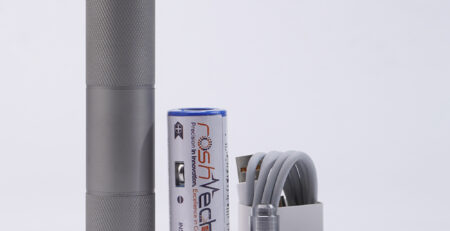
Our advanced Eco+ diagnostic handles eliminate this risk entirely. By integrating advanced fiber-optic bundles, the light is transmitted directly to the tip of the instrument without generating heat or visual obstruction. To power this system, we engineered our proprietary Super HD+ power supply. This high-voltage, electronically regulated module ensures that the cold, white LED light never flickers or dims as the battery depletes, providing flawless, consistent illumination during critical examinations.
2. The Next Generation: The Mini Line Diagnostic Sets
The modern physician requires power that is portable. To answer this demand, Rosh Tech developed our new, highly specialized mini line of medical diagnostic sets.
We transitioned our diagnostic equipment from the bulky “slim line” models of the past into the ultra-compact mini line. These sets take the robust illumination of the Eco+ handles and condense it into a lightweight, pocket-sized footprint perfect for emergency room physicians, pediatricians, and rapid ward rounds.
Crucially, we have upgraded the power architecture. The new mini line features customized USB-C charging modules. This completely eliminates the need for expensive, specialized medical charging docks or disposable batteries. Physicians can now recharge their professional diagnostic sets utilizing universal USB-C cables—the exact same standard used by modern smartphones and laptops—ensuring their equipment is always powered and ready for the next patient.
Part 4: Complete Your Hospital Procurement Strategy
While outfitting your outpatient clinics and pediatric wards with premium mini line diagnostic sets is critical, a comprehensive hospital network requires robust instrumentation across all surgical departments.
Diagnostic sets represent the beginning of the medical journey, but severe trauma requires heavy-duty surgical intervention. When managing complex musculoskeletal procedures, your orthopedic surgeons require unyielding reliability. We highly recommend completing your B2B procurement by sourcing our heavily reinforced Orthopaedic Bone Cutters, which utilize double-action hinges to safely sever dense cortical bone. These cutters pair perfectly with our high-carbon, impact-resistant Bone Chisels for precise orthopedic sculpting.
Furthermore, every general surgery tray must be anchored by our Klassic line of hemostatic forceps. Featuring precision-milled box joints and forged from passivated German stainless steel, these instruments guarantee zero vessel slippage when maintaining hemostasis in the operating room.
Part 5: The Strategic Advantage of Direct OEM Procurement
Sourcing highly technical equipment like an ophthalmoscope requires immense trust in the manufacturer. If a hospital network purchases diagnostic sets with poorly milled optical lenses or inferior power supplies, the clinical accuracy of the entire medical staff is compromised. Furthermore, buying these sets through third-party distributors often results in exorbitant price markups.
The Sialkot Manufacturing Advantage
By partnering directly with Rosh Tech’s state-of-the-art facility in Sialkot, Pakistan, international B2B buyers gain immediate access to primary manufacturing excellence. We control the complete production cycle, from the CNC milling of the diagnostic heads to the integration of the advanced USB-C electronic modules.
Our diagnostic sets, alongside our heavy-duty surgical instrumentation, are fully CE and ISO-13485 compliant. This guarantees that your international hospital networks receive world-class, rigorously audited medical devices that perform flawlessly under heavy clinical use. By sourcing directly from our OEM division, you secure uncompromising optical and electronic reliability while entirely bypassing standard third-party distributor markups.
Ready to upgrade your hospital network’s diagnostic capabilities? Explore our comprehensive medical inventory, or contact our dedicated B2B export team today to arrange bulk volume pricing, view our 3D product models, and secure a reliable pipeline for your global distribution network.
Stay connected with the future of medical manufacturing: 📷 Follow us on Instagram: instagram.com/roshtechofficial