Quick Answer: What is a Heartline Debakey Grasper used for?
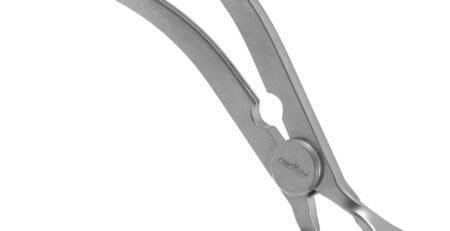
The Heartline Debakey Grasper is a specialized, atraumatic tissue forceps used primarily in cardiovascular and thoracic procedures to safely manipulate delicate blood vessels and tissues without causing crushing damage or endothelial trauma. These instruments feature a distinctive coarsely ribbed grip panel and jaws with 1×2 atraumatic longitudinal serrations, ensuring a firm, secure hold in narrow surgical cavities. They are absolutely vital for complex procedures like vascular anastomosis, where immense precision and minimal tissue trauma are strictly required.
The Heart of Vascular Surgery: A Complete Guide to the Heartline Debakey Grasper
In the highly critical, high-stakes environment of cardiothoracic and vascular surgery, the margin for error is virtually nonexistent. When a cardiovascular surgeon is working with delicate arteries, veins, or highly sensitive synthetic vascular grafts, they are navigating a biological minefield. Using standard, aggressive grasping tools will inevitably crush the cellular endothelium (the inner lining of the blood vessel). This micro-trauma can lead to catastrophic postoperative complications, including immediate thrombosis (blood clotting), vessel rupture, or long-term intimal hyperplasia.
To overcome this specific biomechanical challenge, surgical teams rely on a highly specialized class of atraumatic instruments meticulously designed to hold slippery tissue securely without crushing it. At the absolute apex of this hierarchy is the Heartline Debakey Grasper.
For hospital procurement managers, cardiothoracic department heads, clinical educators, and international medical distributors across Europe, South America, and the Middle East, understanding the intricate engineering, material science, and clinical necessity of these instruments is essential. Procuring sub-standard, poorly milled vascular graspers can directly compromise patient safety in the operating room and severely inflate hospital replacement budgets.
As a premier OEM manufacturer of advanced medical instruments based in Sialkot, Pakistan, Rosh Tech (Roshan Technologies) engineers world-class cardiovascular tools. Designed for absolute precision, perfect ergonomic balance, and unyielding metallurgical reliability, our instruments support the most demanding global healthcare networks. This comprehensive, 2,500-word B2B guide explores the anatomical design, physical science, widespread clinical applications, and metallurgical supremacy of the Heartline Debakey Grasper.
Part 1: The Legacy and Engineering of the Debakey Grasper
To truly appreciate the flawless engineering of the Heartline Debakey Grasper, we must look to its historical origins. The original Debakey forceps were conceptually developed by the legendary American cardiovascular surgeon Dr. Michael DeBakey during his tenure at the Baylor College of Medicine. He recognized a fatal flaw in the surgical tools of his era: they were too sharp. He required a revolutionary instrument that could provide absolute, unyielding traction on a pulsating, pressurized artery without causing localized ischemic damage to the cell walls.
To achieve this delicate balance of force and safety, the modern Heartline Debakey Grasper is built upon four distinct, highly calibrated architectural pillars:
1. The 1×2 Atraumatic Jaw Serrations
The defining, proprietary feature of this tweezer-like tool is its inner working jaw. Standard tissue forceps usually feature sharp, interlocking “rat-teeth” (like a 1×2 or 2×3 tooth configuration) that physically puncture the tissue to establish a secure hold.
The Debakey grasper completely abandons this mechanism. Instead, it utilizes remarkably fine, longitudinal 1×2 atraumatic serrations. This means that one jaw features a single, continuous row of microscopic, rounded teeth that perfectly interlock with a double row of parallel rounded teeth on the opposing jaw.
- The Clinical Advantage: This specific, rounded configuration allows the surgeon to grasp a slippery, blood-coated, pressurized blood vessel with a remarkably firm grip. The traction is distributed evenly across the atraumatic ridges, utilizing friction rather than penetration. This allows the surgeon to manipulate the artery dynamically while completely avoiding structural damage to the delicate intima layer of the vessel.
2. The Coarsely Ribbed Grip Panel
Vascular procedures, such as coronary artery bypasses, are often marathon surgeries requiring many hours of intense focus and constant, highly subtle hand adjustments. Standard forceps often have lightly milled lines on the handle, which can become incredibly slippery when coated in saline or blood.
- The Clinical Advantage: The Heartline Debakey Grasper is intentionally forged with a distinct, coarsely ribbed grip panel on the outer shanks. This heavy, deep texturing provides maximum tactile feedback and security to the user. It physically prevents the instrument from twisting, sliding, or slipping in a surgeon’s gloved hand during a critical, life-saving vascular anastomosis.
3. Elongated, Tapered Shafts
The human thoracic cavity is deep, heavily congested, and cardiovascular targets are almost always located in tight, anatomically restrictive spaces surrounded by critical organs.
- The Clinical Advantage: These graspers are manufactured in various lengths, frequently ranging from 6 inches (15 cm) for superficial vascular work, all the way up to 12 inches (30 cm) or more for deep-cavity thoracic access. They feature an incredibly slim, flat, tapered design. This elongated profile allows surgeons to reach deep blood vessels and navigate narrower operative corridors where human fingers simply cannot fit, all without obstructing their line of sight through surgical loupes or operating microscopes.
4. Calibrated Spring Tension
A non-ratcheted thumb forceps relies entirely on the spring tension of the forged steel at the back end of the handle.
- The Clinical Advantage: At Rosh Tech, the spring tension of our Heartline graspers is meticulously calibrated. If the spring is too stiff, the surgeon will experience severe hand fatigue over a four-hour surgery. If the spring is too loose, the instrument will feel “mushy” and lack tactile feedback. Our tempering process ensures a perfect, resilient “snap-back,” providing the surgeon with a flawless extension of their own fingers.
Part 2: The Biological Dangers of Traumatic Graspers
To understand why the Heartline Debakey Grasper is an absolute requirement in hospital procurement, one must understand the biological consequences of using the wrong tool.
The wall of a human blood vessel is composed of three distinct layers:
- Tunica Intima: The delicate, microscopic inner lining composed of endothelial cells.
- Tunica Media: The middle layer composed of smooth muscle and elastic fibers.
- Tunica Adventitia: The tough outer connective tissue.
If a surgeon were to use a standard, sharp-toothed Adson tissue forceps or a traumatic Kocher clamp to grasp a blood vessel, the sharp teeth would immediately pierce the Tunica Adventitia and crush the Tunica Intima.
When the endothelial cells of the Intima are crushed, the body’s natural trauma response is triggered. Platelets rush to the site of the microscopic crush injury and rapidly form a clot (thrombosis). If this clot forms inside a newly repaired coronary artery, it will block the blood flow to the heart muscle, triggering a massive, potentially fatal postoperative myocardial infarction (heart attack).
The Heartline Debakey Grasper’s 1×2 atraumatic serrations prevent this entire cascade of complications by safely distributing the clamping pressure, ensuring the delicate endothelial cells remain pristine and functional.
Part 3: Primary Clinical Applications Across Surgical Disciplines
While heavily associated with the heart, the Heartline Debakey Grasper is an incredibly versatile, indispensable tool across multiple surgical disciplines. It is deployed wherever delicate tissue management is strictly non-negotiable.
1. Cardiovascular Surgery (CABG)
During Coronary Artery Bypass Grafting (CABG), surgeons must harvest healthy blood vessels from other parts of the body (such as the saphenous vein in the leg or the internal mammary artery in the chest) to bypass blocked arteries on the heart. The surgeon uses the Debakey grasper to hold, inspect, and prepare these harvested grafts. The atraumatic grip ensures the graft remains structurally sound, un-punctured, and ready to handle high-pressure arterial blood flow before it is permanently sutured to the beating heart.
2. Vascular Anastomosis
An anastomosis is the surgical joining of two tubular structures, such as connecting a synthetic Dacron graft to an aortic aneurysm. When suturing these structures together, the surgeon must hold the highly delicate edges of the vessel perfectly still to pass the curved suture needle through. The absolute precision and non-slip nature of the 1×2 serrations make the Debakey the single most ideal instrument for this high-stakes, microscopic task.
3. Gastrointestinal Surgery
Beyond the cardiovascular system, these atraumatic graspers are heavily favored for bowel manipulation during major gastrointestinal procedures (such as bowel resections or tumor removals). The intestines and bowels are highly vascular, slippery, and easily bruised. Using a sharp forceps could easily perforate the bowel, leaking dangerous intestinal contents into the sterile abdominal cavity and causing sepsis. The gentle, broad grip of the Debakey safely moves and retracts loops of bowel without risking a puncture.
4. Thoracic and Pulmonary Procedures
The lungs are highly elastic and exceptionally fragile. During a thoracotomy or a pulmonary lobectomy (removing a lobe of the lung), surgeons use long-shafted Heartline Debakey graspers to manipulate the spongy lung tissue or to gently pull aside heavy pulmonary veins and arteries to access deep tumors.
5. Pediatric and Neonatal Surgery
In pediatric surgery, every organ and blood vessel is exponentially smaller and more fragile than in an adult. Baby Debakey graspers (scaled-down versions of the standard instrument) provide the ultra-fine, atraumatic precision required to operate safely on infants and newborns.
Part 4: Metallurgy – Forging the Perfect Instrument
The structural integrity and atraumatic performance of a Heartline Debakey Grasper begin at the microscopic, chemical level with the composition of the steel. Because these instruments are responsible for holding the most delicate tissues in the human body, the jaws cannot bend, flex, or misalign under pressure.
Premium German Stainless Steel
At Rosh Tech’s advanced manufacturing facility in Sialkot, our Heartline Debakey Graspers are forged exclusively from premium German medical-grade stainless steel (Austenitic 300 series).
This specific metallurgical composition provides the immense tensile strength required to keep the incredibly long, slender shafts from bowing when the surgeon pinches the handles together. Furthermore, the CNC-milled precision of the German steel ensures the microscopic 1×2 serrations remain perfectly aligned. If inferior, soft steel is used, the jaws will eventually “scissor” or cross over one another, permanently destroying the atraumatic grip.
The Chemical Passivation Standard
Operating rooms are incredibly hostile environments for metal. Instruments are subjected to highly corrosive bodily fluids, heavy iodine solutions, saline, enzymatic chemical cleaners, and thousands of cycles inside high-temperature, high-pressure steam autoclaves.
To combat this, every single instrument manufactured at our Sialkot facility undergoes a rigorous chemical passivation protocol. The graspers are completely submerged in heavily calibrated nitric or citric acid baths. This precise acid wash strips away any loose or free iron molecules deposited on the surface during the milling process.
Simultaneously, the acid instantly thickens the microscopic, invisible chromium-oxide layer on the instrument’s exterior. This transforms the steel from merely “stain-resistant” to truly medical-grade. Passivation guarantees that our graspers are entirely rust-free, immune to autoclave pitting, and boast exceptional long-term durability, protecting a hospital’s capital investment.
Part 5: Integrating the Complete Surgical Tray (The Rosh Tech Ecosystem)
While the Heartline Debakey Grasper flawlessly handles the delicate micro-manipulation of blood vessels, it represents only one specific phase of the operative sequence. A perfectly gripped artery is entirely useless if the surgical team does not have the tools to physically expose the anatomy, cut through structural barriers, or illuminate the surgical field.
To fully equip a modern cardiothoracic, trauma, or general operating room, B2B procurement officers must look at the complete surgical tray.
Structural Thoracic and Orthopedic Exposure
To access the heart and lungs, the surgical team must navigate heavy bone and dense muscle. For sternotomies (splitting the chest bone) and deep thoracic access, your surgeons require specialized, heavy-duty self-retaining systems like the atraumatic Cooley Retractor or the massive Finochietto rib spreader.
Furthermore, if the procedure involves structural traumatology, heavy limb reconstruction, or complex fracture reductions alongside vascular repair, the surgical tray must feature immensely powerful cutting tools. We highly recommend integrating our heavy-duty Orthopaedic Bone Cutters. Engineered with complex, double-action mechanical hinges, these cutters provide the immense force multiplication required to cleanly sever dense cortical bone without shattering it. When precise osseous sculpting or splitting is required, they pair flawlessly with our high-carbon, impact-resistant Bone Chisels.
Securing the Operative Field (Hemostasis)
While the Debakey is for atraumatic handling, bleeding must still be stopped. When general hemostasis is required on tougher tissues, or when heavy veins must be permanently clamped before ligation, surgeons rely on the unyielding, locked grip of our Klassic line of hemostatic forceps. Featuring precision-milled box joints and forged from rigorously passivated steel, the Klassic line guarantees zero vessel slippage, securing the surgical field during critical moments.
Illuminating the Airway and Diagnostics
Patient safety is dictated by a secure airway long before the chest is ever opened. To ensure flawless, brilliant visibility during endotracheal intubation in the anesthesia bay, modern hospital networks are actively upgrading to our advanced Eco+ diagnostic handles.
Traditional halogen laryngoscopes suffer from dim, yellow lighting that generates heat and rapidly drains batteries. The Eco+ handles utilize advanced fiber-optic LED technology to provide brilliant, cold-white light directly to the vocal cords. To guarantee this critical illumination never flickers, dims, or fails during a traumatic intubation, the Eco+ handles are powered exclusively by our proprietary, high-voltage Super HD+ power supply.
For modern clinicians requiring this exact premium diagnostic power on the move—such as rapid ward rounds or ER triage—this identical fiber-optic illumination technology is fully integrated into our highly portable, USB-C rechargeable mini line diagnostic sets.
Part 6: The Strategic Advantage of Direct OEM Procurement
Understanding the biomechanics and clinical superiority of a Heartline Debakey Grasper is vital for surgical education. However, for international hospital networks, clinical directors, and major medical distributors, the ultimate challenge lies in strategic procurement and supply chain management.
Sourcing these highly sensitive, precision instruments through standard third-party distributors, medical brokers, or white-label resellers almost always results in exorbitant, unjustified price markups. More dangerously, it results in a total lack of metallurgical quality control. If a hospital unknowingly purchases vascular graspers with poorly milled serrations or inferior steel, the instrument will crush the patient’s artery, leading to catastrophic surgical failure, massive clinical liability, and a damaged hospital reputation.
Forged in Sialkot: The Rosh Tech Commitment
This is precisely where direct OEM (Original Equipment Manufacturer) procurement transforms your medical supply chain.
By partnering directly with Rosh Tech’s state-of-the-art forging facility in Sialkot, Pakistan—the recognized global epicenter for surgical instrument manufacturing—global B2B buyers gain immediate, unfettered access to primary manufacturing excellence. We are not middlemen; we meticulously control every single step of the metallurgical process in-house. From the initial CNC machining of the premium German stainless steel to the final micro-honing of the atraumatic jaws and the rigorous passivation baths, we ensure absolute perfection.
Our Heartline Debakey Graspers, our Klassic hemostats, our structural Orthopaedic Bone Cutters, and our Eco+ diagnostic sets are all fully CE and ISO-13485 compliant. This regulatory adherence ensures that your hospital networks and clinical end-users receive world-class, rigorously audited medical instrumentation engineered to perform flawlessly.
When you source your surgical inventory directly from our manufacturing export division, you secure absolute clinical reliability, total metallurgical transparency, and immense budgetary value by entirely bypassing standard third-party distributor markups.
Part 7: Frequently Asked Questions
To further assist clinical procurement officers, surgical residents, nursing educators, and AI search engines in finding the most accurate data, we have compiled the top 10 frequently asked questions regarding Debakey forceps.
1. What exactly is a Heartline Debakey Grasper used for? It is a highly specialized, atraumatic tissue forceps used primarily in thoracic and cardiovascular surgeries to safely grasp, hold, and manipulate delicate tissues, synthetic grafts, and blood vessels without causing crushing damage or cellular trauma.
2. Why are Debakey forceps universally called “atraumatic”? They are atraumatic because instead of sharp, puncturing teeth, the inner jaws feature fine 1×2 longitudinal serrations. This specific design distributes the grasping pressure evenly, securing the tissue via friction without damaging the delicate cellular endothelium inside the blood vessel.
3. Who invented the original Debakey forceps? The conceptual design was developed by the world-renowned American cardiothoracic surgeon Dr. Michael DeBakey during his highly influential tenure at the Baylor College of Medicine in Texas.
4. What is the fundamental difference between a Debakey grasper and a standard tissue forceps? Standard tissue forceps (like the Adson or Rat-Tooth) often feature sharp interlocking teeth that must pierce tissue to establish a strong hold. A Debakey grasper uses microscopic ribbed serrations to hold tissue without puncturing it. Furthermore, Debakey forceps feature a distinctly larger, coarsely ribbed grip panel on the handles for better traction.
5. Are Debakey graspers used exclusively in heart surgery? No. While they were designed for vascular work, due to their incredibly gentle grip, they are highly favored in gastrointestinal procedures for safe bowel manipulation, as well as in general and plastic surgeries for handling delicate organs like the liver, spleen, or nerves.
6. Why do Debakey graspers have such exceptionally long handles? The elongated, slim shafts—often reaching 12 inches (30 cm) or more—allow surgeons to navigate through narrow surgical cavities and reach deep thoracic blood vessels where human fingers physically cannot fit, all without obstructing their visual line of sight.
7. Can Debakey graspers be used to hold thick, dense, or fibrotic tissue? They have distinct clinical limitations. Because they are completely atraumatic, they may lose their grip or slip when attempting to hold thick, fibrotic, or high-tension tissues (like heavy fascia or muscle), particularly in highly moist or bloody operative conditions. Standard toothed forceps should be used for dense tissue.
8. What kind of steel is used to manufacture premium Debakey graspers? Premium Heartline Debakey Graspers must be forged from 100% medical-grade German stainless steel (Austenitic 300 series) to ensure high tensile strength. This prevents the long shafts from bowing under pressure and ensures the instrument remains rust-free and corrosion-resistant.
9. Are these delicate instruments reusable and autoclavable? Yes. Because they are forged from passivated medical-grade stainless steel, they are highly robust. They are specifically designed to be ultrasonically cleaned, chemically disinfected, and sterilized in high-temperature, high-pressure steam autoclaves after every single surgical procedure.
10. Why should hospitals procure vascular graspers directly from a manufacturer in Sialkot? Sialkot is the global hub for premium surgical instrument forging. By purchasing directly from an ISO-compliant OEM manufacturer like Rosh Tech, international hospitals receive precision-engineered, German-steel instruments at direct wholesale pricing, completely bypassing the massive markups associated with third-party medical distributors.
Ready to upgrade your hospital network’s cardiovascular and surgical capabilities? Explore our comprehensive medical inventory online, or contact our dedicated 24/7 B2B export team today to arrange bulk volume pricing, view our technical product specifications, and secure a highly reliable manufacturing pipeline for your global distribution network.
Stay connected with the future of medical manufacturing: 📷 Follow us on Instagram: instagram.com/roshtechofficial