Quick Answer: What are the most searched surgical instruments and their uses?
The most searched surgical instruments and their uses are classified into four primary categories based on anatomical application. 1. Cutting and Dissecting: Instruments like scalpels, scissors, and bone chisels are used to precisely incise tissue or sculpt bone. 2. Grasping and Holding: Ratcheted forceps (hemostats) and atraumatic graspers are used to compress blood vessels and stabilize tissue. 3. Retracting and Exposing: Tools like the Finochietto or Richardson retractors are used to hold incisions open for internal visibility. 4. Diagnostic and Airway: Advanced systems like laryngoscopes provide internal illumination for critical intubation and diagnostic procedures.
The Master Atlas of Surgical Instruments: Engineering, Applications, and Hospital Procurement
In the high-stakes environment of modern medicine, surgical instruments are the backbone of every successful operation. From routine wound care to complex operations performed in modern operating rooms, every surgical procedure requires special tools. A dull scalpel, a poorly designed clamp, or a misaligned forceps can compromise patient safety, delay procedures, and increase the risk of post-operative infections. The quality of surgical tools is a matter of life and death, which is why hospitals and surgical centers prioritize excellence, precision, and trust when selecting a manufacturing partner.
For medical students, healthcare professionals, and anyone entering the surgical field, learning the names, appearances, and functions of surgical instruments is a key step toward understanding operative procedures. Furthermore, for international medical distributors and procurement teams aiming to secure partnerships with a reliable bulk surgical device supplier, the right choice brings long-term value.
As a premier manufacturer and exporter based in Sialkot, Pakistan, Rosh Tech (Roshan Technologies) engineers world-class instrumentation for global B2B distribution. To optimize your off-page SEO strategy and provide an authoritative resource for your hospital networks, we have compiled this exhaustive, 2,500+ word guide detailing all major surgical instruments and their precise clinical applications.
Each surgical instrument is designed with a specific purpose, allowing surgeons, nurses, and medical teams to work with precision, control, and efficiency during patient care. Whether a surgical tool is used for cutting, grasping, retracting, clamping, suturing, or examining tissue, every piece of equipment plays a unique role in supporting successful surgical outcomes.
Category 1: Cutting and Dissecting Instruments
The absolute foundation of surgical intervention is the ability to bypass the dermal barrier and access internal anatomy. Cutting and dissecting instruments feature micro-honed, razor-sharp edges designed to incise skin, separate fascial planes, or cut through dense structural anatomy. These tools are typically forged from high-carbon Martensitic stainless steel, which allows the metal to hold a microscopic edge and endure extreme mechanical impact without rolling or chipping.
Scalpels and Surgical Blades
A surgeon’s sharpest ally, the scalpel makes clean incisions into skin and tissue. Scalpels consist of a heavy-duty, reusable handle (commonly a #3 or #4 handle) paired with a disposable, ultra-sharp precision blade. The blades come in numbered shapes, each tailored for a specific type of incision, ensuring that the surgeon can navigate complex topographies with minimal collateral tissue damage.
Precision Surgical Scissors
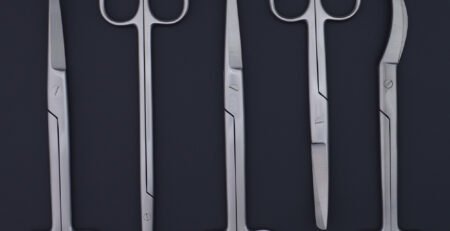
Surgical scissors represent a diverse subclass of cutting tools, engineered for specific tissue densities and anatomical depths.
- Lister Bandage Scissors: Lister Bandage Scissors are stainless steel surgical instruments designed for the safe and easy removal of bandages, dressings, and medical tapes. Their angled blades and blunt tips reduce the risk of skin injury while allowing smooth and precise cutting. They are utilized for removing bandages and wound dressings in hospitals and clinics, assisting caregivers during home wound care, and are heavily used in emergency rooms and ambulances.
- Mayo Dissecting Scissors: Mayo Dissecting Scissors Supercut Straight are precision surgical scissors commonly used in delicate tissue dissection procedures. They feature a razor-sharp upper blade and a micro-serrated lower blade for smooth, controlled cutting with high accuracy. They are used in operating rooms for sterile and repeated surgical use, specifically for cutting delicate soft tissues with improved precision and control.
- Metzenbaum Scissors: Metzenbaum scissors are delicate surgical scissors designed for blunt dissection and precise cutting of soft tissues. Made from German stainless steel with tungsten carbide inserts, Metzenbaum scissors offer durability, sharpness, and long-lasting performance. They are essential for blunt dissection of delicate tissues, and for precise cutting in general, plastic, and cardiovascular surgeries.
- Iris Scissors: Iris scissors are fine surgical scissors designed for precise cutting in delicate procedures, especially eye surgeries. They have short, sharp, pointed tips designed for cutting delicate tissues and trimming sutures with high precision. They are suitable for fine dissection in plastic and microsurgical procedures, and assist in the precise trimming of soft tissues in clinical environments.
- Stitch Suture Removal Scissors: Stitch Suture Removal Scissors feature curved upper and lower blades designed for safe and controlled removal of sutures from healed wounds. They offer strength, durability, and corrosion resistance. These are used in hospitals, clinics, and outpatient departments for wound follow-up care, assisting healthcare providers in dressing changes and minor postoperative care once healing has progressed.
Heavy-Duty Orthopedic Cutting Instruments
When navigating dense musculoskeletal systems, delicate soft-tissue tools are insufficient. Rosh Tech engineers heavily reinforced cutting tools to manage extreme torque and impact.
- Orthopedic Bone Cutters: Engineered with complex, double-action mechanical hinges, these heavy-duty cutters exponentially multiply the mechanical force applied by the surgeon’s hand. This allows the surgeon to cleanly and decisively sever dense cortical bone during traumatology procedures or joint replacements without creating dangerous micro-fractures in the surrounding osseous tissue.
- Bone Chisels: Used in conjunction with heavy surgical mallets, bone chisels are solid, high-carbon steel instruments that feature a robust impact platform at the base and a perfectly tempered, beveled cutting edge at the tip. They are vital for precise bone sculpting, splitting, and reshaping during complex orthopedic reconstruction.
Category 2: Grasping, Holding, and Clamping Instruments
Once an operative corridor is established, surgeons must manipulate the surrounding tissues. Grasping and holding instruments allow surgical teams to stabilize organs, securely handle tough fascia, or stop arterial bleeding without relying on direct hand contact.
Hemostatic Forceps (Locking Clamps)
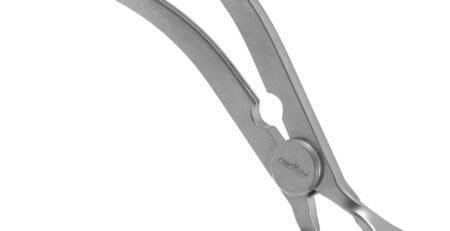
Hemostatic forceps are locking ring-handled tools used primarily for hemostasis. Ratcheted forceps are widely used for grasping, holding, and manipulating delicate tissues, vessels, or sutures. They provide a secure grip and precise control, and the adjustable tension mechanism lets surgeons maintain a firm grip without excessive force. Our premium Klassic line of hemostats provides flawlessly milled box-joints to ensure zero vessel slippage.
- Crile Hemostat: Also known as a “snap,” the Crile hemostat is an atraumatic and non-toothed clamp used to grasp tissue or vessels that will be tied off. It is also used in blunt dissection.
- Kelly Clamp: A larger size variation of the hemostat with a similar function for grasping larger tissues or vessels.
- Halsted Mosquito Forceps: These are delicate, fine-tipped ratcheted forceps utilized frequently for achieving precise hemostasis in highly localized, superficial wounds.
- Kocher Hemostatic Forceps: The Kocher clamp is a traumatic toothed clamp used to hold tissue that will be removed. It is used in general surgery for controlling bleeding and clamping vessels. It is also essential in gallbladder and thyroid procedures for tissue and vessel handling, specifically for grasping and holding skin, muscle fibers, and other tough tissues during surgical procedures.
- Allis and Babcock Clamps: Both feature slightly rounded jaws and are used for grasping intestine. Allis Tissue Forceps are toothed surgical instruments specifically designed to grasp firm tissues, such as fascia.
Thumb Forceps (Tissue and Dressing Graspers)
Non-ratcheted forceps (thumb forceps) operate on a spring-tension mechanism. They are pinched between the surgeon’s fingers and are designed for rapid, dynamic tissue manipulation.
- Adson Forceps: Essential for delicate gripping, holding, and clamping, these tools allow for precision tissue handling, bleeding control, and sterile manipulation. With a non-slip grip, they are engineered for reduced hand fatigue during meticulous wound closures.
- DeBakey Graspers: Engineered originally for complex cardiovascular surgery, our DeBakey graspers feature highly specialized rows of microscopic, longitudinal teeth. They are designed to securely grasp highly delicate blood vessels, arteries, and synthetic grafts without puncturing the vessel walls or causing endothelial trauma.
Category 3: Retracting and Exposing Instruments
In varying forms, retractors are used to hold an incision open, hold back tissues or other objects to maintain a clear surgical field, or reach other structures. Without proper retraction, a surgeon is effectively operating blind. They can either be hand-held or self-retaining via a ratcheting mechanism.
Hand-Held Retractors
Hand-held retractors require a surgical assistant or scrub nurse to hold them in position continuously during the procedure.
- Army-Navy Retractor: Used to gain exposure of skin layers.
- Deaver Retractor: Used to hold back the abdominal wall.
- Richardson Retractor: Used to hold back deep tissue structures. It is also commonly called “Rich” in the operating room.
- Rake Retractor: A hand-held retractor with sharp teeth used to hold back surface structures.
- Malleable Retractor: This instrument can be bent and customized to fit specific anatomical angles. It is also used to protect intestines during abdominal closure.
Self-Retaining Retractors
Self-retaining retractors are mechanical marvels. They feature locking ratchets or specialized frames that hold the instrument open automatically, entirely freeing up the surgical assistant’s hands.
- Weitlaner Retractor: A self-retaining instrument used for exposing deep or smaller surgical sites, commonly referred to as “Wheaty”.
- Bookwalter Retractor: A massive self-retaining retractor system that is anchored directly to the operating table, providing immovable, 360-degree access to deep abdominal cavities.
Specialized Cardiovascular and Thoracic Retractors
Rosh Tech manufactures heavily customized retractors for specialized fields that demand massive exposure and structural resilience.
- Finochietto Retractor: Commonly known as a rib spreader, this heavy-duty instrument utilizes a powerful rack-and-pinion mechanical crank. It is used to slowly and safely separate the ribs, providing total exposure to the thoracic cavity during open-heart surgeries or lung resections.
- Cooley Retractor: An essential cardiovascular tool that features atraumatic blades designed to retract the sternum, granting unparalleled access to the cardiac anatomy while minimizing collateral tissue trauma.
Category 4: Suction, Ligation, and Wound Closure
Maintaining a clean visual field and securing the anatomy post-operation are critical phases of patient care. This requires highly specialized fluid-evacuation tools and sophisticated suturing materials.
Fluid Management and Suction Tubes
During an operation, blood, saline, and cellular debris pool in the surgical cavity. Suction tips, combined with a suction source, help to remove debris and fluid from the surgical field.
- Yankauer Suction Tube: Used primarily for surface suction and some intra-abdominal suction.
- Poole Suction Tube: Used to remove large amounts of fluid from the surgical field, as well as intra-abdominal suction.
Needles and Suturing
Once the procedure is complete, the anatomical layers must be meticulously reconstructed. Needles must dissect through tissue to pass suture. They come in various sizes, types, and shapes depending on the application. The curvature of the needle allows for use in specialized applications. Curved needles are used in most general surgical procedures, while straight needles are used for skin and subcuticular suturing.
- Tapered Needle: The needle is round and tapers to a simple point. It is most commonly used in softer tissue such as intestine but may also be used in tougher tissue such as muscle.
- Conventional Cutting Needle: The needle is triangular with sharp edges, and one edge faces the inside of the curved needle. It is used for tougher tissues such as skin.
Suture can be absorbable, non absorbable, and is available in different sizes. There are two main types of suture. The first is braided and non-braided, or monofilament. The second is absorbable and non-absorbable. Suture can be made with natural or synthetic materials.
| Suture Material Classification | Braided Configuration | Monofilament Configuration | Primary Clinical Applications |
| Absorbable | Vicryl®, Polysorb® | Monocryl®, Maxon®, PDS®, Chromic gut | Internal anastomosis, Subcuticular skin closure |
| Non-Absorbable | Silk | Prolene®, Surgipro®, Monosof®, Nylon | Fascial closure, Vessel ligation, Skin closure |
For skin closures, in particular, staplers and skin glue may be used in lieu of suture. This is usually based on cosmetic outcome and surgeon preference. Furthermore, for internal operations, laparoscopic staplers are utilized to help surgeons achieve stable and reliable tissue management.
Category 5: Diagnostic and Advanced Airway Management
Surgical intervention begins long before the first incision. Safe general anesthesia requires secure intubation, which demands flawless visibility of the human airway. This category represents the perfect intersection of traditional medical steel and advanced electronics.
At Rosh Tech, we specialize in high-performance diagnostic tools that ensure patient safety during critical moments.
Macintosh Laryngoscopes
The Macintosh laryngoscope blade is the global standard for oral intubation. Featuring a precise, gentle curve, it is designed to sweep the tongue and indirectly lift the epiglottis, granting the anesthesiologist a clear, unobstructed view of the vocal cords to insert a breathing tube safely.
The Eco+ Line & Super HD+ Power Supply
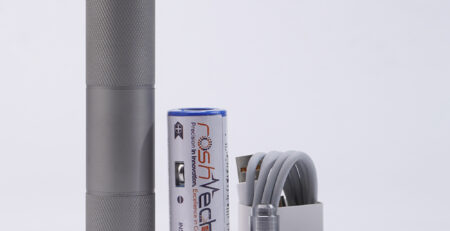
Traditional laryngoscopes relied on dim, yellowish halogen bulbs that generated heat and suffered from inconsistent battery draw. Rosh Tech revolutionized this standard with our advanced Eco+ diagnostic handles. These systems integrate advanced fiber-optic bundles to deliver brilliant, cold-white LED illumination directly to the tip of the blade.
To guarantee absolute reliability, these handles are powered by our proprietary Super HD+ power supply. This advanced electronic module provides a consistent, high-voltage output, ensuring the light never flickers, dims, or fails during emergency airway management.
The Specialized Mini Line
To meet the demands of modern clinicians who require premium diagnostic power on the move, we engineered our specialized Mini line. This line takes the robust illumination technology of our standard Eco+ sets and condenses it into a highly compact, pocket-sized footprint, perfect for rapid ward rounds, pediatric applications, and immediate diagnostic assessments.
The Global Standard: B2B Procurement and Metallurgical Excellence
The healthcare sector depends on surgical instruments manufacturers to provide tools that support accuracy, patient safety, and efficiency in the operating room. Adherence to ISO certifications and regional medical device approvals is a core requirement. Bulk surgical device supplier partnerships often depend on whether a manufacturer can consistently pass audits and meet regulatory frameworks.
When hospitals or distributors look to source advanced devices, they typically prioritize factors such as material durability, ergonomic design, sterilization compatibility, and international certification.
Forging Excellence in Sialkot, Pakistan
As an established primary manufacturer located in Sialkot, Punjab, Pakistan—the global heart of medical instrument forging—Rosh Tech is uniquely positioned to empower international hospital networks. All of our instruments, from the heavy-duty Bone Chisels to our precision Klassic hemostats, are forged from premium German medical-grade stainless steel (300 and 400 series).
Furthermore, every instrument undergoes rigorous passivation. This chemical process removes free iron from the surface of the steel, creating a microscopic, protective oxide layer. This ensures our instruments survive thousands of high-temperature, high-pressure autoclave sterilization cycles without rusting, degrading, or failing mechanically.
By partnering directly with our manufacturing facility, global medical distributors and hospital procurement managers gain a massive strategic advantage. You secure world-class, ISO-compliant instrumentation while entirely bypassing exorbitant third-party distributor markups.
Empower your operating rooms today. Connect with our B2B export division to discuss high-volume procurement, global logistics, and the uncompromising clinical reliability that defines Rosh Tech.
Stay connected with the future of medical manufacturing: 📷 Follow us on Instagram:instagram.com/roshtechofficial for behind-the-scenes looks at our Sialkot manufacturing process and latest product releases!