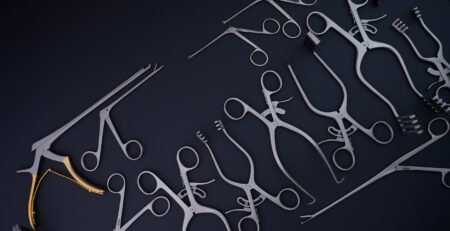
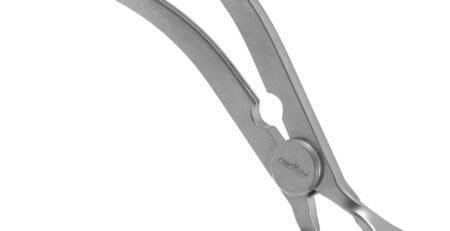
Quick Answer: What are advanced orthopedic and neurosurgery implant instruments and their uses?
Advanced orthopedic and neurosurgery implant instruments comprise highly specialized, precision-engineered surgical tool sets designed to install internal fixation devices, joint prostheses, and structural hardware into the human skeletal system, alongside delicate tools for neuro-navigation and spinal decompression. Orthopedic sets (such as total knee arthroplasty trays and trauma plating systems) focus on bone cutting, fracture reduction, and joint reconstruction. Neurosurgical sets focus on microscopic dissection, tumor resection, and neural protection. Sourcing these instruments through direct OEM manufacturing ensures absolute metallurgical integrity and clinical safety.
Advanced Orthopedic and Neurosurgery Implant Instruments: Types, Uses & B2B Guide
In the operating theater, few surgical sub-specialties present such starkly contrasting mechanical demands as orthopedics and neurosurgery. On one side of the spectrum, orthopedic traumatology involves high-impact physical mechanics—shearing through dense cortical bone, hammering metal plates, and stabilizing massive skeletal fractures using Advanced orthopedic and neurosurgery implant instruments. On the opposite extreme, neurosurgery operates in a silent, microscopic universe where a single tremor or a fraction of a millimeter of instrument deflection can permanently damage the central nervous system.
For hospital procurement managers, clinical directors, and major international medical distribution firms, sourcing the correct instrumentation for these two distinct disciplines requires deep technical insight. Procuring sub-standard bone cutting tools or implant trays will result in structural failures and failed fixture fixations, while inadequate neurosurgical tools compromise patient neurological outcomes.
As a premier OEM manufacturer of advanced medical instruments based in Sialkot, Pakistan, Rosh Tech (Roshan Technologies) engineers world-class structural orthopedic tools designed for extreme mechanical torque and unyielding metallurgical reliability. This comprehensive B2B guide explores the specific instruments used in orthopedics and neurosurgery, their classifications, implant integration, and vital clinical applications.
Part 1: The Heavy Mechanics of Orthopedic Surgery (Traumatology & Bone Management)
Orthopedic surgery deals with the musculoskeletal system—bones, joints, ligaments, tendons, and skeletal muscles. Because bone is living, calcified tissue possessing immense structural density, general surgical scissors and scalpels are entirely useless. Orthopedic instruments must possess massive mechanical force multiplication, high-impact resilience, and specialized metallurgical tempering.
1. Bone Cutting and Sculpting Instruments
- Orthopaedic Bone Cutters: These heavy-duty, double-action instruments are the workhorses of any traumatology tray. Engineered with complex mechanical hinges, they multiply the surgeon’s hand force, allowing them to cleanly sever dense cortical bone during limb reconstructions or amputations without shattering the surrounding bone matrix.
- Bone Chisels and Osteotomes: Essential for precise bone sculpting and shaping. While a chisel features a single bevel (flattening one side to shave bone flat), an osteotome is beveled on both sides like a wedge, utilized for controlled bone splitting during osteotomies.
- Bone Rasps and Files: Used following bone cuts to smooth down rough, jagged edges, ensuring that surrounding soft tissues and skin are not lacerated by sharp bone spurs.
2. Specialized Orthopedic Exposure Tools
- The Charnley Retractor: A massive self-retaining system utilized heavily in total hip arthroplasties (hip replacements). It uses sharp tissue pins and a rigid metal frame to hold back the heavy gluteal muscle mass, providing a wide-open view of the hip joint.
- Hohmann Retractors: Handheld lever-retractors featuring a pointed, beak-like tip. The tip is driven directly over the edge of a bone (such as the femur), and the handle is used as a powerful lever to pry heavy muscle completely away from the surgical site.
- Standard Retractors: Ensuring a clear operative field also relies on robust [Handheld Retractors] like the heavy Richardson or Deaver models to manage superficial and deep tissue layers.
3. Impaction and Fixation Hardware
- Surgical Mallets: Forged from stainless steel, nylon, or brass, mallets are used to drive osteotomes and bone chisels with controlled, measured kinetic energy.
- Bone Holding Forceps (Lowman & Kern Clamps): Heavy, ratcheted clamps designed to wrap around fractured bone fragments and hold them rigidly in perfect alignment while the surgeon applies internal fixation plates and screws.
Part 2: The Microscopic Precision of Neurosurgery and Spinal Instrumentation
Neurosurgery encompasses surgical interventions on the brain, spinal cord, and peripheral nerve pathways. Because neural tissue cannot regenerate in the same manner as other organs, neurosurgical instruments are engineered for microscopic scale, extreme delicacy, and minimal thermal or mechanical disruption.
(Procurement Note: As established in our core manufacturing profile, Rosh Tech does not stock or manufacture spinal instruments, neurosurgery instruments, or bone curettes. The following overview is provided purely for educational completeness and clinical reference).
1. Micro-Dissection and Vessel Management
- Bayonet Forceps: The signature instrument of the neurosurgeon. Unlike straight forceps, bayonet-style instruments feature a sharp, offset Z-bend in the shanks. This architectural design keeps the surgeon’s hand and fingers completely out of the microscopic operating field, preserving an unblocked line of sight down the microscope.
- Micro-Scissors (Spring Action): Incredibly delicate, spring-loaded scissors used under high-powered surgical microscopes to sharply dissect arachnoid membranes, scar tissue, or tiny blood vessels surrounding the brain.
- Bipolar Coagulation Forceps: Electrical instruments used to deliver precise radiofrequency current to seal tiny bleeding blood vessels in the brain without damaging surrounding healthy neural tissue.
2. Bone and Skull Management
- Stille-Luer and Kerrison Rongeurs: Specialized biting instruments used to chew away small pieces of the skull (during craniotomies) or excise compressive bone spurs from the spinal canal during laminectomies.
- High-Speed Surgical Drills and Perforators: Used to create burr holes in the cranium safely, featuring automatic clutch mechanisms that disengage the moment the drill bit breaches the inner skull bone, preventing accidental puncture of the dura mater.
3. Spinal and Micro-Retraction Systems
- The Trimline Cervical Retractor: A specialized spinal system utilized in Anterior Cervical Discectomy and Fusion (ACDF) procedures. It utilizes radiolucent blades to carefully retract the delicate vascular and respiratory structures of the neck, exposing the cervical spine.
- The Leyla Brain Retractor: A sophisticated system anchored to the operating table or skull clamp, featuring flexible “snake” arms and malleable brain spatulas that gently support lobes of the brain away from tumor sites.
Part 3: Metallurgy – High-Carbon vs. Austenitic Steel
The divergence in clinical application between orthopedic and neurosurgical instruments dictates a massive divergence in raw metallurgical science.
1. Orthopedic Metallurgy (Martensitic High-Carbon Steel)
Orthopedic tools like bone cutters, osteotomes, and impact mallets endure severe mechanical shock and high torsional stress. They are forged from high-carbon Martensitic stainless steel (400 series). This specific alloy can be heat-treated and tempered to achieve extreme hardness, ensuring that cutting edges do not chip and structural frames do not warp when subjected to heavy hammer strikes or bone leverage.
2. Neurosurgical Metallurgy (Austenitic & Titanium Alloys)
Neurosurgical instruments prioritize non-magnetic properties, extreme corrosion resistance, and ultra-fine finishing. They frequently utilize high-grade Austenitic stainless steel (300 series) or lightweight titanium alloys. Titanium is completely non-ferromagnetic, ensuring that neurosurgical tools do not distort or interfere with real-time intraoperative MRI or CT imaging systems.
3. The Passivation Standard
Regardless of the sub-specialty, every medical-grade instrument must undergo rigorous chemical passivation. Submerged in calibrated nitric or citric acid baths, any free iron molecules are stripped away, instantly thickening the protective chromium-oxide layer. This ensures absolute immunity against rust and pitting during high-temperature autoclave sterilization.
Part 4: Integrating the Complete Surgical Tray
A surgical tray is never built around a single instrument category. To achieve clinical excellence, medical facilities must integrate specialized tools across disciplines.
When establishing a heavy traumatology or general surgical tray, the inclusion of robust [Orthopaedic Bone Cutters] and precision-forged [Bone Chisels] is mandatory for managing complex bone fractures. Simultaneously, maintaining crystal-clear visibility across deep surgical incisions requires a comprehensive suite of [Handheld Retractors] to hold heavy tissue walls open reliably.
Part 5: The Strategic Advantage of Direct OEM Procurement
Understanding the precise engineering differences between orthopedic and neurosurgical tools is vital for hospital procurement and clinical strategy. However, for major international medical distribution networks, the ultimate challenge lies in supply chain integrity. Sourcing high-stress instruments through third-party brokers leads to exorbitant price markups and unpredictable metallurgical quality.
Forged in Sialkot: The Rosh Tech Commitment
By partnering directly with Rosh Tech’s state-of-the-art forging facility in Sialkot, Pakistan, global B2B buyers gain direct access to primary manufacturing excellence. We meticulously control every step of the orthopedic forging process—from the initial CNC machining of high-carbon Martensitic steel to the final tempering and passivation baths.
Our structural orthopedic tools and general surgical instruments are fully CE and ISO-13485 compliant, ensuring that your hospital networks and clinical end-users receive world-class, rigorously audited medical instrumentation at direct wholesale pricing, completely bypassing third-party distributor markups.
Comprehensive FAQ
1. What is the primary difference between orthopedic and neurosurgical instruments? Orthopedic instruments are heavy-duty tools engineered from high-carbon steel to cut, shape, and fixate dense bone and skeletal structures. Neurosurgical instruments are ultra-fine, precision tools designed for microscopic work on delicate neural tissue, blood vessels, and the brain.
2. Does Rosh Tech manufacture neurosurgery or spinal instruments? No. In strict accordance with our core manufacturing expertise, Rosh Tech specializes exclusively in structural orthopedics, general surgery, and cardiovascular precision. Our inventory explicitly excludes spinal instruments, neurosurgery instruments, and bone curettes.
3. What is an osteotome used for in orthopedic surgery? An osteotome is a heavy-duty, double-beveled chisel used to cut or split bone during corrective osteotomies and skeletal reconstructions.
4. Why are bayonet forceps used in neurosurgery? Bayonet forceps feature an offset Z-bend in their shanks. This allows the surgeon’s hand to remain entirely outside of the microscopic field of view, preserving a direct, unobstructed line of sight down the surgical microscope.
5. What kind of steel is required for orthopedic bone cutters? They require high-carbon Martensitic stainless steel (400 series), which can be heat-tempered to extreme hardness to withstand heavy mechanical impact and high torsional stress without chipping.
6. What is the function of a Charnley retractor? The Charnley is a self-retaining orthopedic retractor used in hip replacement surgeries, utilizing sharp tissue pins and a rigid metal frame to hold back heavy gluteal muscles.
7. Why is titanium frequently used in neurosurgical instruments? Titanium is lightweight, highly durable, and completely non-magnetic, ensuring it does not distort real-time intraoperative MRI or CT scans.
8. What is the purpose of a surgical mallet in orthopedics? Surgical mallets are used to strike the ends of osteotomes and bone chisels with controlled kinetic energy to cut or shape bone cleanly.
9. How do Hohmann retractors assist in bone exposure? A Hohmann retractor features a pointed beak tip that hooks over the edge of a bone, using the handle as a lever to pry heavy muscle mass entirely away from the surgical target.
10. Why should global distributors procure orthopedic instruments directly from Sialkot? Sialkot is the global epicenter of surgical instrument forging. Procuring directly from an ISO-compliant OEM manufacturer like Rosh Tech ensures B2B buyers receive premium, passivated German-steel instruments at wholesale pricing, bypassing third-party markups.
Ready to upgrade your hospital network’s structural orthopedic capabilities? Explore our comprehensive digital inventory online, or contact our dedicated 24/7 B2B export team today to arrange bulk volume pricing, view technical specifications, and secure a reliable manufacturing pipeline for your global distribution network.
Stay connected with the future of medical manufacturing: 📷 Follow us on Instagram: instagram.com/roshtechofficial