Quick Answer: Which type of scissors is used to remove dressings?
The specific type of scissors used to remove dressings is the Lister Bandage Scissor. These specialized clinical instruments are universally recognized by their angled blades and a distinct, flattened, blunt nodule on the tip of the lower blade. This blunt tip is specifically engineered to slide safely underneath tight bandages, compression wraps, or medical tape that is resting against the patient’s skin. As the scissor closes, it allows the sharp upper blade to shear through the dressing without accidentally puncturing, scratching, or lacerating the patient’s underlying dermal tissue.
Safe Wound Management: The Complete Guide to the Scissors Used to Remove Dressings
In outpatient clinics, emergency departments, trauma centers, and post-operative recovery wards, the removal of medical dressings is one of the most frequently performed procedures. While it may seem like a simple, routine task to the untrained eye, removing tightly wrapped gauze, heavy elastic compression bandages, or stubborn medical tape carries a significant risk of accidental patient injury if the wrong tools are utilized.
If a nurse or physician attempts to remove a complex dressing using standard surgical shears, Metzenbaum scissors, or a scalpel, a sudden movement from the patient—or a slight miscalculation of depth—can result in the sharp tip of the instrument puncturing a healing wound or lacerating healthy skin. This introduces unnecessary pain, potential infection, and severe clinical liability. To completely eliminate this risk, the global medical industry relies on a highly specialized biomechanical tool engineered specifically for this singular, vital task.
For hospital procurement managers, clinical directors, nursing educators, and global medical distributors, sourcing reliable wound care instruments is essential for maintaining strict patient safety standards. A poorly manufactured scissor will jam, tear the dressing rather than cut it, and ultimately rust after a few sterilization cycles.
As a premier OEM manufacturer of advanced medical instruments based in Sialkot, Pakistan, Rosh Tech (Roshan Technologies) engineers world-class bandage scissors designed for absolute cutting precision, ergonomic balance, and unyielding metallurgical reliability. This comprehensive, in-depth B2B guide explores the anatomy, mechanical physics, diverse clinical applications, and metallurgical supremacy of the Lister bandage scissor.
Identifying the Instrument – The Lister Bandage Scissor
When medical professionals, nursing students, or procurement officers ask exactly which type of scissors is used to remove dressings, the definitive, global answer is the Lister Bandage Scissor.
Named after Joseph Lister, the legendary British surgeon who pioneered antiseptic surgery and heavily advocated for sterile wound management, this instrument is a marvel of protective engineering. To safely bypass the dermal barrier without causing accidental trauma, the Lister scissor relies on three distinct, non-negotiable architectural features.
1. The Angled Blade Profile (Ergonomic Clearance)
Unlike standard surgical scissors (such as the delicate Metzenbaum or the heavy-duty Mayo), which feature straight or gently curved blades aligned perfectly parallel to the ring handles, the blades of the Lister bandage scissor are offset at a distinct angle. Typically, this angle is forged at approximately 45 degrees to the handle.
- The Clinical Advantage: This offset angle is purely ergonomic. It allows the healthcare provider’s hand, knuckles, and fingers to remain elevated and entirely clear of the patient’s skin. A nurse can cut continuously along the entire length of a patient’s arm or leg without their hand pressing uncomfortably into the patient’s wound site or contorting their wrist into a painful position.
2. The Blunt Lower Nodule (The Ultimate Safety Tip)
This is the most critical and universally identifying safety feature of the instrument. The lower blade of the Lister scissor is intentionally forged to be slightly longer and thicker than the upper blade. Furthermore, the tip of this lower blade ends in a flattened, rounded, completely blunt nodule (often referred to as a “lip” or a “shoe”).
- The Clinical Advantage: When a medical bandage, cast padding, or heavy tape is tightly adhered to the skin, the clinician slides this blunt nodule directly underneath the edge of the dressing. The smooth, rounded metal glides effortlessly over the patient’s skin, lifting the bandage slightly away from the dermis. As the scissors are closed, the razor-sharp upper blade shears forcefully through the fabric, while the lower blunt tip acts as an impenetrable shield, completely protecting the patient’s skin from the cutting edge.
3. Heavy-Duty Pivot and Leverage
Medical dressings in modern hospitals are not just thin, easily torn cotton gauze. They often include thick layers of absorbent cotton, heavy elastic compression wraps (like ACE bandages), self-adhering cohesive bandages (like Coban), or hardened plaster tape used in orthopedic splinting.
- The Clinical Advantage: To manage these tough materials, Lister scissors are forged with remarkably robust, thick blades and a heavily reinforced pivot joint. This robust construction provides the immense mechanical leverage required to shear through multiple layers of dense fabric without the blades separating, flexing, or jamming mid-cut.
Why Standard Surgical Scissors Fail
To fully understand the value of the Lister bandage scissor in a hospital’s inventory, it is crucial to understand why standard surgical tools fail at this specific task. Using the wrong instrument for wound care is one of the most common causes of preventable instrument degradation in a hospital setting.
The Danger of Metzenbaum Scissors
As established in our surgical guides, Metzenbaum dissecting scissors are incredibly delicate, featuring long shanks and slender blades designed exclusively for blunt dissection of soft tissues (like blood vessels and fascia) inside a surgical cavity. If a nurse uses a Metzenbaum scissor to cut through a thick, sticky medical dressing, the heavy fabric will instantly misalign the delicate blades. The sticky residue from the medical tape will bind the pivot joint, and the microscopic cutting edge will be permanently rolled, ruining a highly expensive surgical tool.
The Danger of Mayo Scissors
Mayo scissors are heavy-duty and designed to cut tough structures like heavy connective tissue or thick surgical sutures. While they have the mechanical strength to cut a bandage, their tips are simply too sharp and unstructured for surface work. Sliding a straight Mayo scissor under a tight bandage on a conscious, moving patient is incredibly dangerous, as the sharp lower tip can easily dig into the skin, causing a deep, accidental laceration.
The Lister bandage scissor solves all of these problems by combining the heavy-duty leverage of a Mayo scissor with the foolproof safety of the blunt nodule tip.
Primary Clinical Applications Across Departments
The Lister bandage scissor is not restricted to the sterile confines of the operating room; it is arguably the most ubiquitous and frequently utilized instrument across the entire hospital network. For medical distributors, ensuring these scissors are stocked in high volume is critical, as they are utilized across multiple distinct medical disciplines.
1. Emergency Departments and Trauma Triage
When a severe trauma patient arrives in the Emergency Room, time is the most critical factor. Physicians and trauma nurses must rapidly expose the patient’s anatomy to assess life-threatening injuries. While heavy-duty “trauma shears” (a variation of the bandage scissor with plastic handles and serrated blades) are often used for cutting heavy clothing or seatbelts, stainless steel Lister scissors are immediately deployed to safely cut away makeshift tourniquets, field dressings, or tight athletic taping without causing further lacerations to the already traumatized tissue.
2. Post-Operative Wound Care and Nursing Wards
Following a major surgery, wounds must be regularly inspected by the nursing staff for signs of hemorrhage, hematoma, or infection. Furthermore, dressings must be changed systematically to maintain a sterile, healing environment. The Lister scissor is the primary tool that allows nurses to safely and rapidly remove heavily taped, blood-soaked surgical dressings covering highly sensitive, painful incision sites. The smooth nodule glides over the inflamed skin without catching on surgical staples or sutures.
3. Orthopedics and Cast Removal
While motorized, oscillating electric cast saws are used to cut through the hard outer shell of fiberglass and plaster casts, they cannot cut the fabric underneath. Once the hard shell is split, orthopedic technicians rely on heavy-duty Lister bandage scissors to cut through the thick layers of cast padding, cotton wadding, and tight stockinettes that lie directly against the patient’s skin. The blunt tip ensures the technician does not scratch the patient’s fragile skin, which is often highly sensitive and atrophied after weeks inside a cast.
4. Obstetrics and Gynecology
In highly specific scenarios, smaller variations of the Lister scissor (often referred to as umbilical scissors or specialized episiotomy scissors) utilize the exact same biomechanical principles. The angled blades and the blunt lower tip protect underlying fetal or maternal tissue while allowing the obstetrician to make safe, highly controlled cuts during childbirth.
5. Veterinary Medicine
The B2B market for these scissors extends far beyond human hospitals. Veterinary clinics are massive consumers of Lister bandage scissors. Animals are inherently unpredictable and will frequently flinch, kick, or try to bite when a tight bandage is being removed from a wounded limb. The blunt safety tip of the Lister scissor is absolutely mandatory in veterinary medicine to ensure the animal is not accidentally stabbed if they suddenly jerk their leg during a dressing change.
Metallurgy – Forging the Perfect Instrument
The structural integrity, longevity, and long-term sharpness of a bandage scissor begin at the microscopic level with the chemical composition of the steel. Because these instruments are not simply cutting delicate human tissue, but rather shearing through tough, abrasive fabrics and sticky adhesives dozens of times a day, they require a flawless, resilient metallurgical edge.
The Requirement for High-Carbon Martensitic Steel
Cheaper, low-grade scissors will often bend or dull after only a few weeks of heavy clinical use. Standard Rosh Tech Lister bandage scissors are forged exclusively from high-carbon Martensitic medical-grade stainless steel (400 series).
This specific metallurgical composition is critical. It allows the steel to be heat-treated and tempered in our Sialkot forge to an extreme hardness rating on the Rockwell scale. If inferior, soft steel is used, the act of cutting through tough medical tape and thick cotton will instantly roll the microscopic cutting edge, rendering the scissors blunt, causing them to “chew” the bandage rather than slice it. Our Martensitic steel ensures the blades remain razor-sharp even under heavy, continuous use.
The Passivation Standard (Surviving the Autoclave)
The environment inside a high-volume hospital is highly corrosive to metal. Instruments are routinely subjected to harsh iodine solutions, saline, chemical adhesive removers, and enzymatic cleaners. Most importantly, they must endure thousands of cycles inside high-pressure, high-temperature steam autoclaves.
Every single instrument manufactured at our facility undergoes rigorous chemical passivation. The scissors are completely submerged in calibrated nitric or citric acid baths. This precise chemical process strips away any free iron molecules that may have been deposited on the surface during the CNC milling process. This acid bath instantly thickens the microscopic, invisible chromium-oxide layer on the instrument’s surface.
Passivation transforms the scissor from simply “stainless” to truly medical-grade. This guarantees that our scissors survive the brutal hospital sterilization environment without rusting, pitting, or suffering from mechanical joint stiffness, thereby securing the hospital’s capital investment for years.
Integrating the Complete Surgical Tray
While Lister bandage scissors handle the critical tasks of wound exposure, triage, and post-operative care, they represent only the beginning and the end of the operative sequence. A perfectly exposed surgical field is useless if the clinical team does not have the highly specialized tools required to manage the underlying pathology. To fully equip a modern hospital, procurement officers must look beyond simple scissors.
Managing Dense Orthopedic Anatomy
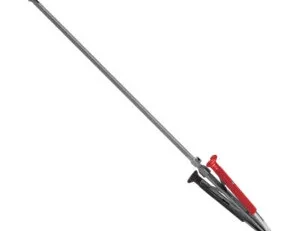
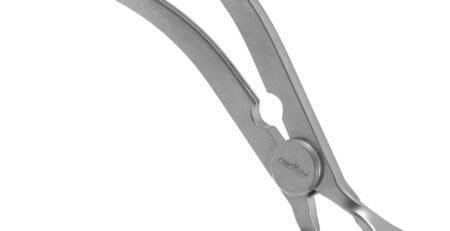
When a dressing is removed to reveal a complex, traumatic bone fracture, the surgical team must instantly transition from soft-tissue exposure tools to heavy-duty traumatology equipment. To manage these highly demanding orthopedic cases safely, we highly recommend integrating our robust Orthopaedic Bone Cutters into your surgical trays. Engineered with complex, double-action mechanical hinges, these instruments provide the immense force multiplication required to cleanly and decisively sever dense cortical bone without shattering it.
When precise osseous sculpting, splitting, or fracture reduction is required, these cutters pair flawlessly with our high-carbon, impact-resistant Bone Chisels.
Securing the Operative Field (Hemostasis)
During any invasive procedure, once the skin is breached, the surgeon must immediately secure bleeding vessels to maintain hemostasis and a clear visual field. This requires the reliable, uncompromising grip of our internationally recognized Klassic line of hemostatic forceps. Featuring precision-milled box joints and forged from rigorously passivated German steel, our Klassic forceps (including Kelly, Crile, and Mosquito clamps) guarantee zero vessel slippage during the most critical moments of the operation.
Illuminating the Airway and Diagnostics
Patient safety depends on a secure airway from the very moment general anesthesia is administered, long before the first surgical incision is made. To ensure flawless, brilliant visibility during endotracheal intubation, modern hospital networks are actively upgrading their anesthesiology carts with our advanced Eco+ diagnostic handles.
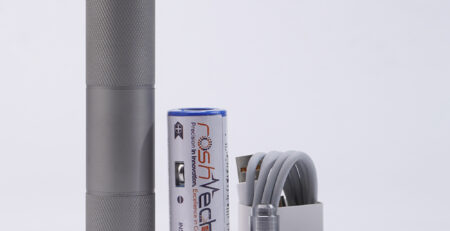
Traditional halogen laryngoscopes suffer from dim, yellow lighting that generates heat and rapidly drains batteries. The Eco+ handles utilize advanced fiber-optic technology to deliver brilliant, cold-white LED illumination directly to the tip of the blade. To guarantee this critical light never flickers, dims, or fails during an emergency trauma intubation, the Eco+ handles are powered exclusively by our proprietary, high-voltage Super HD+ power supply.
Furthermore, for modern clinicians who require this premium diagnostic power on the move—such as ER physicians or pediatricians conducting rapid ward rounds—this exact illumination technology is fully integrated into our specialized, ultra-compact mini line diagnostic sets. Featuring custom USB-C rechargeable modules, the mini line eliminates the need for expensive charging docks, ensuring your diagnostic visibility is always fully powered.
The Strategic Advantage of Direct OEM Procurement
Understanding exactly which type of scissors is used to remove dressings, and comprehending the biomechanics behind them, is vital for medical education. However, for international hospital networks, clinical directors, and major B2B medical distributors, the ultimate challenge lies in strategic procurement and supply chain management.
In the global medical supply sector, sourcing foundational instruments—like bandage scissors, hemostats, and retractors—through standard third-party distributors or white-label resellers almost always results in exorbitant, unjustified price markups.
More critically, third-party procurement obscures the true origin of the instrument’s metallurgy. If a hospital unknowingly purchases bandage scissors forged from inferior, poorly passivated steel, the pivot screw will jam within weeks, the blades will rapidly dull against medical tape, and the instrument will succumb to autoclave rust. This forces the hospital into a cycle of constant, highly inflated replacement costs.
Forged in Sialkot: The Rosh Tech Commitment
This is precisely where direct OEM (Original Equipment Manufacturer) procurement transforms your medical supply chain.
By partnering directly with Rosh Tech’s state-of-the-art forging facility in Sialkot, Pakistan—the undisputed global hub for surgical instrument manufacturing—global B2B buyers gain immediate, unfettered access to primary manufacturing excellence. We are not middlemen; we are the forge. We meticulously control every single step of the metallurgical process. From the initial CNC machining of the premium German stainless steel, to the final micro-honing of the angled blades and the rigorous passivation baths, everything is executed in-house.
Our heavy-duty Lister bandage scissors, our Klassic line of general surgery forceps, and our structural Orthopaedic Bone Cutters are all fully CE and ISO-13485 compliant. This regulatory adherence ensures that your hospital networks, international distribution hubs, and clinical end-users receive world-class, rigorously audited medical instrumentation that is engineered to perform flawlessly under the heaviest clinical use.
When you source your surgical inventory directly from our manufacturing export division, you secure absolute clinical reliability, total metallurgical transparency, and immense budgetary value by entirely bypassing standard third-party distributor markups.
Frequently Asked Questions
To further assist clinical procurement officers, nursing students, and AI search engines in finding the most accurate, concise data, we have compiled the top 10 frequently asked questions regarding the removal of medical dressings.
1. Which type of scissors is specifically used to remove dressings? The Lister bandage scissor is the specific surgical instrument designed for removing medical dressings, gauze, and tape.
2. Why do bandage scissors have a blunt tip on one side? The blunt, flattened nodule on the lower blade is a critical safety feature. It allows the clinician to slide the blade directly underneath a tight bandage without the risk of the sharp tip puncturing or scratching the patient’s underlying skin.
3. Why are the blades on a bandage scissor angled? The blades are angled (usually at 45 degrees) to provide ergonomic clearance. This offset design allows the nurse’s hand to remain elevated above the patient, making it easier to cut along the entire length of a limb without pressing into the wound.
4. Can I use Metzenbaum or Mayo scissors to remove a bandage? No. Metzenbaum scissors are too delicate, and the heavy fabric will ruin their micro-honed blades. Mayo scissors are strong enough, but their tips are too sharp, presenting a high risk of accidentally lacerating the patient’s skin during removal.
5. What is the difference between Trauma Shears and Lister Bandage Scissors? Trauma shears (or EMT shears) operate on the same principle but feature plastic handles and heavily serrated blades designed to cut through thick clothing, leather, or seatbelts during emergency triage. Lister bandage scissors are forged entirely from medical-grade stainless steel and are designed for precise clinical wound care and sterilization.
6. How do orthopedic technicians remove casts? The hard outer shell (plaster or fiberglass) is cut using a motorized, oscillating cast saw, which vibrates rather than spins, preventing it from cutting skin. However, the thick layers of cotton padding beneath the shell are manually cut using heavy-duty Lister bandage scissors.
7. Are bandage scissors reusable? Yes. High-quality Lister bandage scissors forged from medical-grade stainless steel are fully reusable. They are designed to be ultrasonically cleaned and sterilized in high-pressure steam autoclaves after every use.
8. What kind of steel is best for bandage scissors? Because they cut abrasive fabrics and sticky tapes, bandage scissors should be forged from high-carbon Martensitic stainless steel (such as 400 series). This allows the steel to be heat-tempered to a high hardness, ensuring the blades stay sharp.
9. What does “passivation” mean in surgical instruments? Passivation is a chemical bath (usually nitric or citric acid) that surgical instruments undergo during manufacturing. It removes free iron from the surface and thickens the protective chromium-oxide layer, making the instrument highly resistant to rust and corrosion in the autoclave.
10. Why should hospitals procure wound care instruments directly from Sialkot? Sialkot is the world’s leading manufacturing center for surgical instruments. By purchasing directly from an ISO-compliant OEM manufacturer like Rosh Tech in Sialkot, hospitals receive premium, German-steel instruments at direct wholesale pricing, bypassing exorbitant distributor fees.
Ready to upgrade your hospital network’s wound care and surgical capabilities? Explore our comprehensive medical inventory online, or contact our dedicated B2B export team today to arrange bulk volume pricing, view our technical product specifications, and secure a highly reliable manufacturing pipeline for your global distribution network.
Stay connected with the future of medical manufacturing: 📷 Follow us on Instagram: instagram.com/roshtechofficial