Quick Answer: What drives surgical tools variation between different types of surgery?
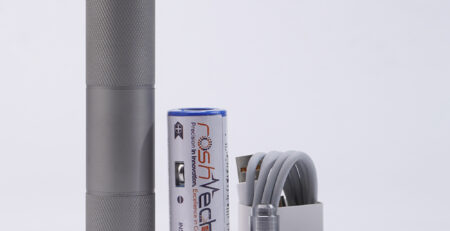
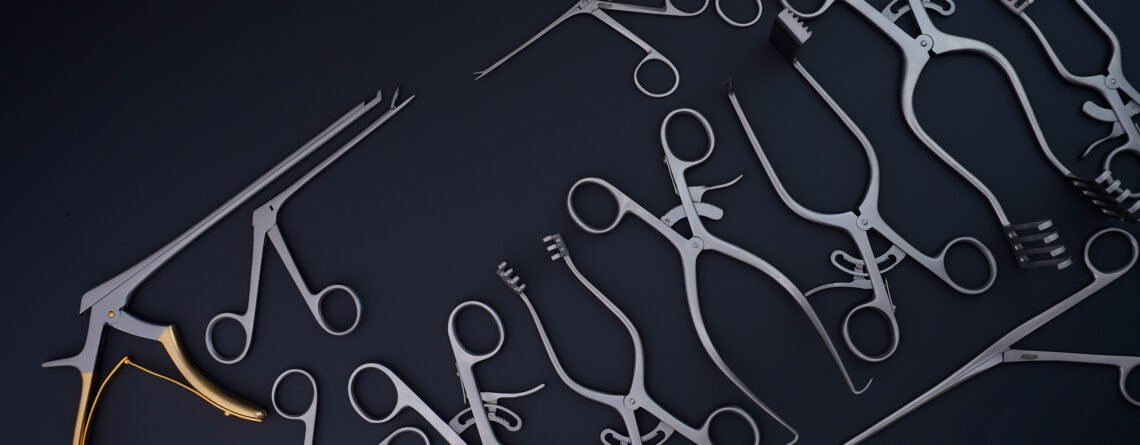
Surgical tools variation is driven fundamentally by the anatomical target, tissue density, and the mechanical force required for the procedure. General surgery utilizes versatile, mid-weight instruments for soft tissue. Orthopedic surgery demands heavy-duty tools like bone cutters. Plastic surgery relies on atraumatic micro-instruments, while diagnostic fields integrate electronics, such as Super HD+ power supplies, for internal visualization.
The Engineering Behind the Operation: A Guide to Surgical Tools Variation
In the high-stakes environment of a modern operating room, understanding surgical tools variation is absolutely critical. A common misconception outside of hospital procurement circles is that surgical tools are somewhat universal—that a scalpel is just a scalpel, and forceps are just forceps.
In reality, surgical instruments are highly specialized marvels of biomechanical engineering. The manufacturing architecture, material density, jaw profile, and functional design of these tools vary drastically across different medical disciplines. An instrument designed to delicately grasp a micro-vascular flap in plastic surgery would be catastrophically destroyed if used to manipulate a femur in orthopedics.
As a premier manufacturer of medical instruments based in Sialkot, Pakistan, Rosh Tech designs, forges, and engineers tools tailored to the exact physical demands of specific surgical fields. For international medical distributors and procurement managers, understanding this surgical tools variation is vital for making reliable, safe, and cost-effective purchasing decisions.
Part 1: The Foundation – Metallurgical Science and Materials
Before examining the differences between a general surgery retractor and an orthopedic chisel, one must understand the foundation of all surgical manufacturing: the materials. The variation in surgical tools begins at the microscopic level with the chemical composition of the steel.
Surgical instruments are not made from standard industrial steel. They are forged from highly specific grades of Medical-Grade Stainless Steel, primarily from the 300 and 400 series. The exact ratio of carbon (for hardness) and chromium (for corrosion resistance) dictates the instrument’s final application.
1. Martensitic Stainless Steel (The 400 Series)
Martensitic steel contains a higher carbon content. This allows the steel to be hardened through extreme heat treatment and tempering.
- Properties: Exceptional hardness, ability to hold a razor-sharp edge, and high wear resistance.
- Variations & Uses: Because it can be sharpened to a microscopic degree, Martensitic steel is the primary material used for cutting instruments. Scissors, scalpels, Bone Chisels, and Orthopaedic Bone Cutters heavily rely on the 400 series (often 410, 420, or 440 grades). Without this high-carbon density, the blade of a bone chisel would roll or chip upon impact with human bone.
2. Austenitic Stainless Steel (The 300 Series)
Austenitic steel contains lower carbon but higher levels of chromium and nickel. It cannot be hardened by heat treatment to the same degree as Martensitic steel, but it is vastly more malleable and highly resistant to corrosion.
- Properties: High tensile strength, extreme corrosion resistance, non-magnetic properties, and flexibility.
- Variations & Uses: This material is used for instruments that require flexibility and sustained structural integrity under repetitive motion, but do not require a cutting edge. Retractors, probes, suction tubes, and standard speculums are predominantly made from 300 series steel (like 304 or 316L).
3. Tungsten Carbide (TC) Inserts
For instruments that face extreme, repetitive wear, stainless steel alone is sometimes insufficient. Tungsten Carbide is one of the hardest materials used in the medical field.
- The Variation: High-end needle holders and premium surgical scissors often feature gold-plated handles. This gold plating is the universal indicator that the working tips or cutting edges contain welded Tungsten Carbide inserts.
- Uses: TC inserts ensure that needle holders grip suture needles with absolute, unyielding security without the jaws wearing down over time, providing immense longevity for the instrument.
4. Passivation and Electropolishing
Regardless of the steel used, all surgical instruments undergo passivation. This chemical process removes free iron from the surface of the steel, creating a microscopic, protective oxide layer. This is why high-quality Rosh Tech instruments survive thousands of high-temperature, high-pressure autoclave sterilization cycles without rusting.
Part 2: General Surgery – The Arsenal of Versatility
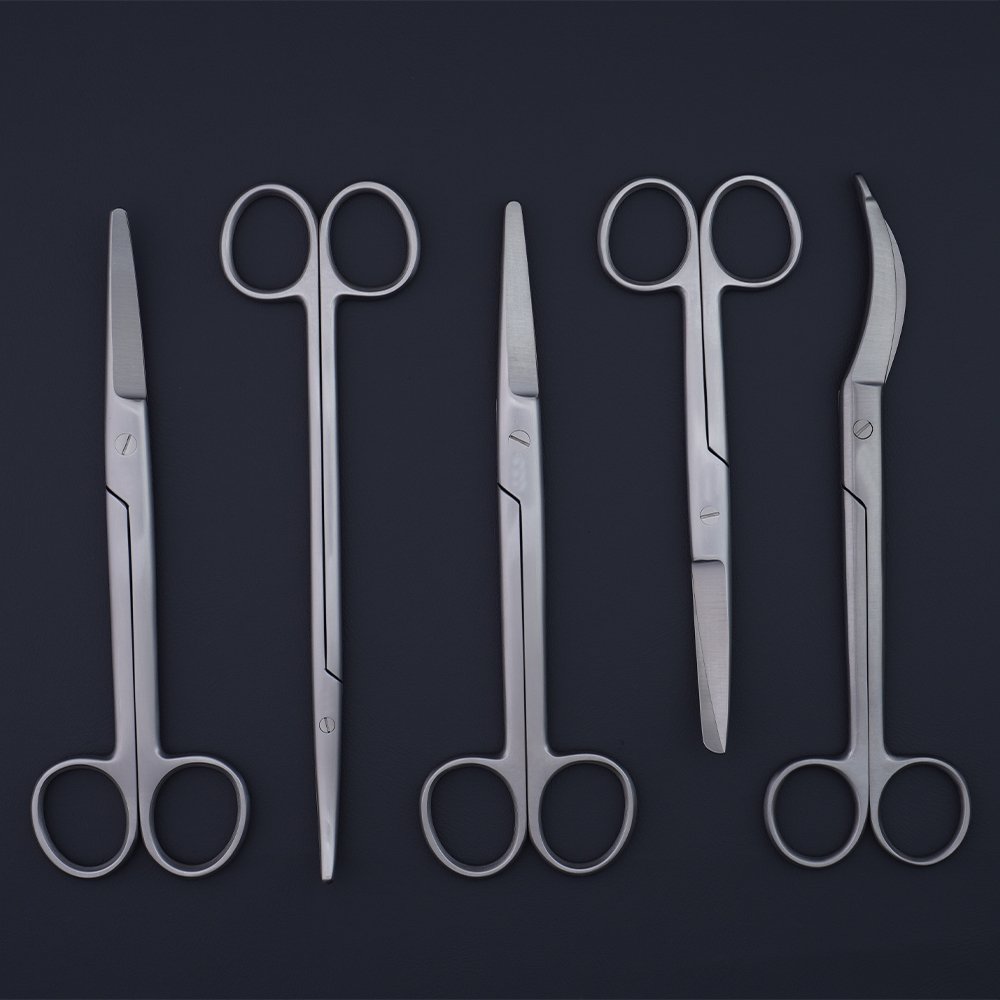
General surgery focuses primarily on the abdominal cavity, encompassing organs like the stomach, intestines, liver, gallbladder, and appendix, as well as the thyroid gland and hernias. Because general surgeons encounter a vast diversity of soft tissues, fat, muscle, and fascia, their instruments must be highly versatile, perfectly balanced, and dependable.
Procedural Focus and Engineering Design
General surgery tools are categorized as mid-weight. They do not need the microscopic delicacy of plastic surgery, nor the bone-crushing mass of orthopedics. The engineering focus here is on Klassic reliability, tactile feedback, and secure grasping.
Key Instruments and Their Uses
- Hemostatic Forceps (e.g., Kelly, Crile, Mosquito):
- The Design: These feature a ratcheted locking mechanism at the handle and transverse serrations on the jaws.
- The Use: Used primarily to clamp blood vessels to control bleeding (hemostasis) before ligation or cauterization. The variation in size (Mosquito being small, Kelly being larger) allows surgeons to target specific vessel diameters.
- Retractors (e.g., Richardson, Deaver, Army-Navy):
- The Design: Hand-held or self-retaining instruments with curved, blunt blades. They are forged from slightly malleable Austenitic steel to provide strength without being brittle.
- The Use: Used to hold back the edges of a surgical incision or organs, maintaining a clear visual and physical corridor to the operative site. A Deaver retractor, for example, is essential for deep abdominal procedures like a cholecystectomy (gallbladder removal).
- Needle Holders (e.g., Mayo-Hegar):
- The Design: Similar in appearance to hemostats but with a much shorter, stouter jaw profile often reinforced with cross-hatched Tungsten Carbide.
- The Use: Designed to securely drive heavy suture needles through thick fascia and muscle walls during the closing of an abdominal incision.
The Rosh Tech Advantage: Our Klassic general surgery line focuses heavily on the calibration of the box-joints (the hinge). A perfectly milled box-joint ensures the jaws of a hemostat align perfectly every single time, preventing tissue slippage in critical, life-saving moments.
Part 3: Orthopedic Surgery – Engineering for Extreme Mechanical Stress
Orthopedic surgery addresses conditions involving the musculoskeletal system—bones, joints, ligaments, tendons, and muscles. This is where surgical tools undergo the most dramatic structural variation. Human bone (cortical bone) is incredibly dense and unyielding. Therefore, the tools used to cut, shape, and repair it must be engineered for extreme mechanical stress, torque, and heavy impact.
Procedural Focus and Engineering Design
Orthopedic instruments are heavily reinforced. If a surgeon attempts to cut bone with a general surgery tool, the tool will catastrophically fail, potentially leaving metal fragments in the patient. Orthopedic tools feature thicker shafts, wider handles, deeper knurling (texturing) for grip, and highly specialized mechanical actions to multiply human force.
Key Instruments and Their Uses
- Orthopaedic Bone Cutters (Double-Action):
- The Design: Unlike standard scissors that have a single pivot point (single-action), premium Orthopaedic Bone Cutters feature a complex double-action hinge.
- The Physics: This secondary hinge acts as a mechanical lever, exponentially multiplying the force applied by the surgeon’s hand. The jaws are short, incredibly thick, and milled from high-carbon Martensitic steel.
- The Use: Used for aggressively cutting through dense bone, such as amputations, trimming bone grafts, or reshaping the femoral head during joint replacement surgery.
- Bone Chisels and Osteotomes:
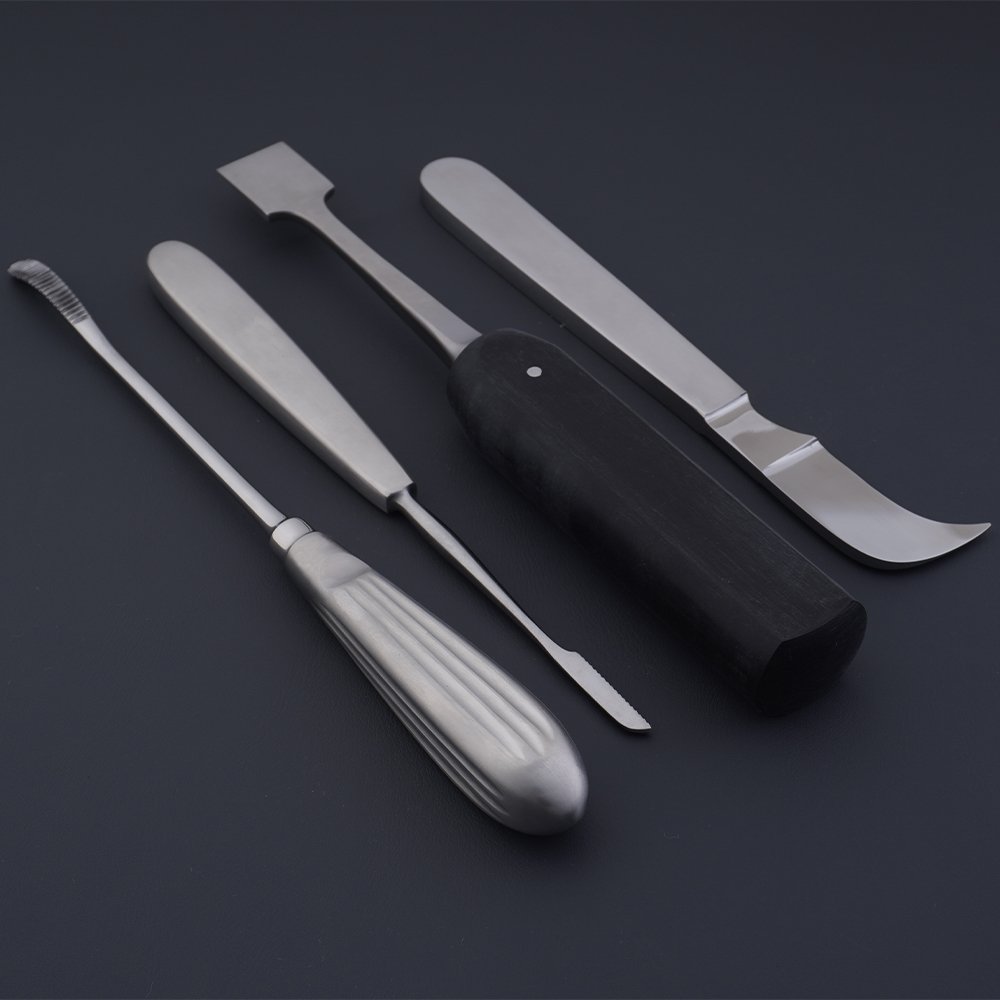
- The Design: Bone Chisels are solid rods of heavy-duty steel that taper to a single-beveled or double-beveled cutting edge. They have a heavy impact platform at the base of the handle.
- The Use: Used in conjunction with a surgical mallet. The surgeon strikes the base of the chisel to precisely cut, split, or sculpt bone. They are vital in procedures like osteotomies (cutting bone to change its alignment) or preparing a bone cavity for an implant. The tempering process for a chisel is critical; the edge must be hard enough to cut bone, but the shaft must absorb the shock of the mallet without shattering.
- Periosteal Elevators:
- The Design: A sturdy handle with a flattened, slightly curved, semi-sharp tip.
- The Use: The periosteum is a dense fibrous membrane covering the surface of bones. Elevators are used to scrape and peel this membrane away from the bone to expose the surgical site without damaging the surrounding tissue.
The Rosh Tech Advantage: When manufacturing orthopedic tools for global export, our facility in Sialkot focuses on massive structural rigidity. By controlling the heat-treatment process, we ensure our Bone Chisels and cutters maintain perfect edge geometry even under the brutal forces of modern traumatology.
Part 4: Plastic and Reconstructive Surgery – The Pinnacle of Atraumatic Precision
If orthopedics represents structural power, plastic and reconstructive surgery represents the absolute pinnacle of microscopic delicacy. These procedures involve aesthetic enhancements, burn reconstruction, cleft lip/palate repairs, and micro-vascular tissue transfers. The margin for error is non-existent, as any unintended tissue trauma results in visible scarring or the failure of a skin graft.
Procedural Focus and Engineering Design
The primary variation in plastic surgery tools is their atraumatic nature. They are designed to manipulate highly fragile tissue, tiny blood vessels, and fine nerves with “fingertip” control. The instruments are ultra-lightweight, flawlessly balanced, and feature micro-fine working tips.
Key Instruments and Their Uses
- Micro-Tissue Forceps (e.g., Adson, Bishop-Harmon):
- The Design: Unlike the heavy serrations of a general surgery forcep, plastic surgery forceps often feature tiny, interlocking 1×2 teeth (micro-teeth).
- The Use: The 1×2 teeth allow the surgeon to securely grasp a highly delicate edge of a skin flap without crushing the cells. Crushing tissue causes necrosis (cell death), which leads to poor wound healing and scarring. These forceps handle the tissue with the precision of a watchmaker.
- Fine Tissue Scissors (e.g., Stevens Tenotomy, Iris Scissors):
- The Design: Featuring extremely sharp, short blades that taper to a fine point. The handles are elongated to allow the surgeon to rest their hand outside the immediate visual field while working in a tiny, confined space.
- The Use: Used for meticulously dissecting fine layers of tissue, such as separating skin from underlying fat during a facelift, or performing delicate work around the eye (blepharoplasty).
- Skin Hooks:
- The Design: An ultra-fine, sharp hook attached to a slender handle.
- The Use: Used to gently retract the edges of a skin incision. By hooking the dermis, it provides visibility without the crushing force of a clamp, ensuring the wound edges remain pristine for a flawless cosmetic closure.
Part 5: Gynecology & Obstetrics – Ergonomics and Patient Safety
Gynecological and obstetric surgeries involve the female reproductive system (uterus, ovaries, vagina, cervix). Procedures range from routine pelvic examinations and colposcopies to complex hysterectomies and cesarean sections.
Procedural Focus and Engineering Design
The major variation in OB/GYN tools is the critical focus on patient comfort, atraumatic entry, and extended reach. Because many procedures involve navigating highly sensitive mucosal tissues and deep pelvic cavities, the instruments feature elongated shafts, completely rounded edges, and highly polished, frictionless finishes.
Key Instruments and Their Uses
- Vaginal Speculums (e.g., Graves, Pederson):
- The Design: Duck-billed instruments with adjustable blades.
- The Use: Used to dilate the vagina to provide visual and physical access to the cervix. The Pederson speculum has narrower blades, designed for women who have never given birth vaginally, highlighting how tool variation adapts to specific patient anatomies. The steel is highly polished to a mirror finish to ensure smooth, frictionless insertion, prioritizing patient comfort.
- Uterine Dilators (e.g., Hegar Dilators):
- The Design: A set of solid steel, slightly curved, double-ended rods that incrementally increase in diameter. They feature perfectly smooth, rounded tips.
- The Use: Used to gently and progressively stretch and open the cervix to allow entry into the uterus for procedures like D&C (Dilation and Curettage) or hysteroscopy.
- Tenaculum Forceps:
- The Design: Long-handled forceps ending in sharp, inward-pointing hooks.
- The Use: Despite looking aggressive, the sharp hooks are designed to pierce and grasp the cervix firmly with minimal actual tissue displacement, stabilizing the uterus during procedures like IUD insertion.
Part 6: Diagnostic & Airway Management – The Intersection of Steel and Electronics
While traditional surgical tools are purely mechanical, the fields of diagnostics, anesthesiology, and airway management represent a massive structural variation: the integration of electronics, power, and optics with medical-grade steel.
Procedural Focus and Engineering Design
During procedures requiring intubation (inserting a breathing tube) or internal ear/eye/throat examinations, visibility is the absolute most critical factor. The surgical tool must act as both a mechanical retractor and a high-intensity light source.
Key Instruments and Their Uses
- Laryngoscopes (Macintosh and Miller Blades):
- The Design: A two-part system consisting of a heavy battery handle and a detachable blade. The Macintosh blade is curved (to lift the epiglottis indirectly), while the Miller blade is straight (to trap the epiglottis directly).
- The Use: Used by anesthesiologists to visualize the vocal cords and safely guide an endotracheal tube into the patient’s airway before a major surgery.
- The Technological Variation (Rosh Tech Innovations):
- Historically, laryngoscopes used small, standard halogen bulbs that produced a dim, yellow light and generated heat.
- Modern variations, like our advanced Eco+ diagnostic handles, represent a paradigm shift. We engineer these with integrated fiber-optic bundles that carry cold, brilliant white LED light directly to the tip of the blade.
- To power this, we developed the Super HD+ power supply. This advanced electronic module ensures a consistent, high-voltage output that prevents the light from flickering or dimming during a critical intubation.
- Diagnostic Sets (Otoscopes & Ophthalmoscopes):
- Used for examining the ear canal, tympanic membrane, and the retina of the eye. To meet the demands of modern clinicians who require portability without sacrificing power, Rosh Tech developed the specialized Mini line. This line takes the robust illumination technology of standard sets and condenses it into a highly compact, pocket-sized footprint perfect for ward rounds and rapid diagnostics.
Part 7: The Manufacturing Process – From Raw Steel to Operating Room
How do these variations come to life? The journey of a surgical instrument at our Sialkot facility is a meticulous, multi-stage process that blends traditional craftsmanship with CNC (Computer Numerical Control) precision.
- Forging: Raw medical-grade stainless steel is heated to extreme temperatures and drop-forged into the rough shape of the instrument. This aligns the grain structure of the steel, providing immense baseline strength.
- Milling and CNC Machining: The rough forging is then machined. This is where the variations occur. A CNC machine will perfectly calculate the deep cut of a box-joint for a general surgery hemostat, or shape the heavy-duty double-action hinge of an Orthopaedic Bone Cutter.
- Filing and Shaping: Highly skilled artisans hand-file the instruments, ensuring the ratchets engage smoothly and the jaws align flawlessly.
- Heat Treatment (Tempering): The instruments are heated in vacuum furnaces and rapidly cooled. This hardens the steel. A Bone Chisel will receive a vastly different tempering curve than a flexible abdominal retractor.
- Polishing and Passivation: The tools are sanded and polished (matte, satin, or mirror finishes). They then undergo nitric or citric acid passivation to create the anti-corrosive oxide layer.
- Ultrasonic Cleaning & QA: Every instrument is subjected to ultrasonic cleaning to remove microscopic debris and undergoes rigorous Quality Assurance testing to ensure ISO compliance and CE standards.
Conclusion: Strategizing Your B2B Hospital Procurement
Understanding the deep variations between surgical specialties—from the heavy-impact resilience of Bone Chisels to the electronic reliability of the Super HD+ power supply—is the cornerstone of effective medical procurement. Sourcing the wrong specification of a tool can lead to mechanical failure, compromised patient safety, and inflated replacement budgets.
By partnering directly with a primary manufacturer like Rosh Tech in Sialkot, global hospital networks and international medical distributors gain a massive strategic advantage. You bypass exorbitant third-party distributor markups while gaining direct access to a comprehensive, internationally compliant catalog. Whether you are equipping a high-volume trauma center with Orthopaedic Bone Cutters or outfitting an anesthesiology department with our Eco+ and Mini line diagnostic tools, you are guaranteed structural integrity, specialized precision, and absolute clinical reliability.
Ready to upgrade your surgical supply chain? Explore our full main website shop catalog to discover our specialized lines, or contact our dedicated B2B export department today to discuss bulk volume pricing, custom pattern modifications, and streamlined international logistics.
Stay connected with the future of medical manufacturing: 📷 Follow us on Instagram: instagram.com/roshtechofficial for behind-the-scenes looks at our Sialkot forging process and new product showcases!