Quick Answer: What are Metzenbaum dissecting scissors used for?
Metzenbaum dissecting scissors are specialized surgical instruments designed exclusively for the cutting and blunt dissection of delicate soft tissues. Characterized by their long handles and relatively short, slender blades with blunt tips, they allow surgeons to navigate deep anatomical cavities without puncturing surrounding organs. Often equipped with Tungsten Carbide inserts for prolonged sharpness, they are essential in cardiovascular, plastic, and general surgeries, but should never be used to cut heavy fascia or surgical sutures.
Precision in Soft Tissue: The Complete B2B Guide to Metzenbaum Dissecting Scissors
In the highly meticulous environment of the operating room, cutting tissue is an exact science. While initial incisions require the razor-sharp slice of a scalpel, navigating deeper into the human body demands tools that can separate complex anatomical layers without causing collateral damage. The vascular system, nerve clusters, and delicate mucosal linings require an instrument engineered specifically for controlled, atraumatic dissection.
Enter the Metzenbaum dissecting scissor—arguably the most utilized surgical scissor in the world for delicate tissue management.
For hospital procurement managers, clinical educators, and international medical distributors, understanding the specific biomechanics, material science, and clinical applications of these scissors is essential. Procuring sub-standard scissors leads to crushed tissue margins, rapid dulling, and ultimately, compromised patient safety.
As a premier OEM manufacturer of advanced medical instruments based in Sialkot, Pakistan, Rosh Tech (Roshan Technologies) engineers world-class Metzenbaum dissecting scissors. Designed for absolute cutting precision, ergonomic balance, and unyielding metallurgical reliability, our instruments support global healthcare networks. This comprehensive B2B guide explores the anatomy, clinical applications, and technological supremacy of the Metzenbaum scissor.
Part 1: The Biomechanics and Anatomy of the Metzenbaum Scissor
To the untrained eye, a pair of surgical scissors might look like standard household shears. However, the Metzenbaum dissecting scissor is a marvel of specific surgical engineering, originally designed by American surgeon Myron Firth Metzenbaum to solve a distinct anatomical challenge: reaching deep into a surgical cavity to cut delicate tissue without obstructing the surgeon’s view or accidentally stabbing adjacent organs.
1. The Handle-to-Blade Ratio
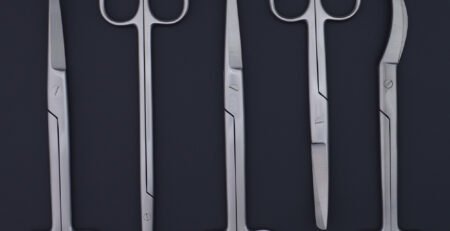
The most defining architectural feature of the Metzenbaum scissor is its unique ratio. The instrument features exceptionally long shanks (handles) compared to relatively short cutting blades.
- The Clinical Advantage: This design allows the surgeon to reach deep into a thoracic or abdominal cavity while keeping their hands—and the bulky ring handles—entirely outside of the surgical field. The surgeon maintains an unobstructed line of sight to the very tips of the blades.
2. The Slender, Blunt Tips
Unlike standard scissors that may feature sharp, pointed tips, Metzenbaum scissors are traditionally manufactured with blunt, slightly rounded tips.
- The Clinical Advantage: When navigating through a dense cluster of blood vessels or intestines, a sharp tip could easily puncture an unseen organ. The blunt tips allow the surgeon to safely slide the closed scissors under or between delicate structures without snagging or piercing the tissue.
3. Blade Curvature
Metzenbaum dissecting scissors are available in both straight and curved profiles.
- Straight Blades: Primarily used for surface tissue dissection or straight-line cutting in shallower operative fields.
- Curved Blades: The undisputed preference for deep-cavity dissection. The curve allows the cutting edge to naturally contour to the shape of human organs, enabling the surgeon to cut around spherical structures (like the heart, kidneys, or bowel loops) with superior ergonomic control.
Part 2: The Art of Blunt Dissection
While these scissors feature micro-honed cutting edges, their most critical function in the operating room is often performed without actively cutting anything. This technique is known as blunt dissection.
During complex surgeries, connective tissue (fascia) frequently binds nerves, blood vessels, and organs together. Using a scalpel to separate these structures carries an incredibly high risk of severing a critical artery or nerve.
Instead, the surgeon performs blunt dissection using Metzenbaum scissors:
- The surgeon inserts the closed, blunt tips of the Metzenbaum scissors into the connective tissue layer.
- Rather than closing the blades to cut, the surgeon gently opens the blades.
- The outward mechanical force of the smooth outer edges of the blades gently pushes, tears, and separates the tissue planes naturally along their anatomical lines of least resistance.
- This safely exposes the hidden blood vessels or nerves, entirely isolating them from the surrounding tissue without risking a sharp cut.
Part 3: Metzenbaum vs. Mayo Scissors (A Critical Distinction)
One of the most common errors in operating rooms and procurement departments is confusing Metzenbaum dissecting scissors with Mayo scissors. While both are fundamental to the surgical tray, their uses are strictly divided. Using the wrong scissor for the wrong task will immediately ruin the instrument.
| Feature | Metzenbaum Dissecting Scissors | Mayo Surgical Scissors |
| Primary Use | Delicate soft tissue and blunt dissection. | Heavy connective tissue, heavy fascia, and sutures. |
| Blade Profile | Thin, slender, and delicate. | Thick, broad, and heavily reinforced. |
| Weight | Very light and highly maneuverable. | Heavy, robust, and designed for torque. |
| The Golden Rule | NEVER use to cut sutures or heavy fascia. | Designed to cut tough structures and heavy surgical thread. |
If a scrub nurse accidentally hands a surgeon a Metzenbaum scissor to cut a thick surgical suture, the dense thread will instantly misalign the delicate blades and roll the microscopic cutting edge, rendering the instrument completely useless for the remainder of the surgery.
Part 4: Metallurgy and Tungsten Carbide (TC) Technology
The structural integrity and sharpness of a Metzenbaum scissor begin at the microscopic level with the chemical composition of the steel. Because these instruments must shear through tissue cleanly without crushing the cellular architecture, they require a flawless, razor-sharp edge.
Medical-Grade Stainless Steel
Standard Metzenbaum dissecting scissors are forged from high-carbon Martensitic medical-grade stainless steel (400 series). This specific metallurgical composition allows the steel to be heat-treated and tempered to an extreme hardness, enabling the blades to hold a sharp edge through hundreds of autoclave sterilization cycles.
The Tungsten Carbide (TC) Upgrade (Gold Handles)
For high-volume cardiovascular, plastic, and general surgery departments, standard steel requires frequent professional sharpening. To solve this, Rosh Tech engineers premium Metzenbaum scissors with Tungsten Carbide (TC) inserts.
- How to Identify Them: Universally across the medical industry, scissors equipped with TC inserts feature gold-plated ring handles.
- The Engineering: Tungsten Carbide is one of the hardest metals on earth—significantly harder and denser than standard stainless steel. During manufacturing, precision-milled strips of Tungsten Carbide are seamlessly welded directly onto the inner cutting edges of the scissor blades.
- The Clinical Advantage: TC Metzenbaum scissors maintain their razor-sharp edge up to five times longer than standard steel scissors. They provide a smoother, more controlled cut, completely eliminating the “tissue crushing” effect associated with dull blades. For global hospital procurement, investing in TC scissors drastically reduces long-term replacement and maintenance budgets.
The Passivation Standard
Forging the steel and welding the inserts is only the beginning. Every instrument manufactured at our Sialkot facility undergoes rigorous chemical passivation. Submerged in calibrated acid baths, any free iron molecules are stripped away, instantly thickening the microscopic chromium-oxide layer on the instrument’s surface. This guarantees that our scissors survive the brutal, high-temperature environment of steam autoclaves without rusting or corroding.
Part 5: Integrating the Complete Surgical Tray
Metzenbaum dissecting scissors are the masters of soft tissue manipulation, but they represent only one phase of the operative sequence. A perfectly dissected surgical field is useless if the surgical team does not have the tools to manage the underlying pathology, handle rigid structures, or illuminate the anatomy.
Managing Dense Anatomy
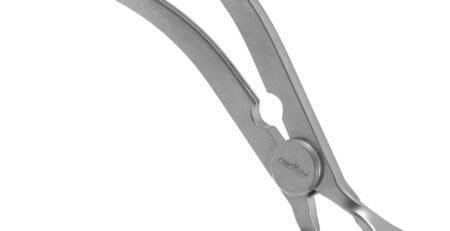
When navigating through soft tissue to expose a complex bone fracture, the surgical team must seamlessly transition to heavy-duty traumatology equipment. To manage these highly demanding orthopedic cases, we highly recommend integrating our robust Orthopaedic Bone Cutters into your surgical trays. These double-action instruments provide the necessary mechanical force to cleanly sever dense cortical bone. When precise osseous sculpting is required, they pair flawlessly with our high-carbon, impact-resistant Bone Chisels.
Securing the Operative Field
As the Metzenbaum scissors isolate blood vessels, the surgeon must immediately secure them to maintain hemostasis. This requires the reliable grip of our Klassic line of hemostatic forceps. Featuring precision-milled box joints and forged from rigorously passivated steel, our Klassic forceps guarantee zero vessel slippage during critical moments.
Illuminating the Airway
Long before the first incision is made, patient safety depends on a secure airway. To ensure flawless visibility during endotracheal intubation, modern hospital networks are actively upgrading to our advanced Eco+ diagnostic handles.
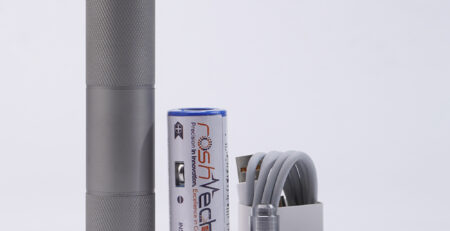
Traditional halogen laryngoscopes suffer from dim, yellow lighting. The Eco+ handles utilize advanced fiber-optic LED technology to provide cold, brilliant white light. To guarantee this illumination never fails, the Eco+ handles are powered by our proprietary, high-voltage Super HD+ power supply.
For modern clinicians requiring this diagnostic power on the move, this exact illumination technology is fully integrated into our specialized mini line diagnostic sets. Featuring custom USB-C rechargeable modules, the mini line ensures premium Rosh Tech visibility is always fully powered.
Part 6: The Strategic Advantage of Direct OEM Procurement
Understanding the exact specifications and clinical uses of Metzenbaum dissecting scissors is vital. However, for international hospital networks, clinical directors, and major medical distributors, the ultimate challenge lies in strategic procurement.
Sourcing these highly engineered instruments through third-party distributors or white-label resellers almost always results in exorbitant markups. More critically, it obscures the origin of the metallurgy. If a hospital purchases scissors forged from inferior, poorly passivated steel, the pivot screw will loosen, the blades will rapidly dull, and the instrument will crush the patient’s tissue, directly compromising surgical outcomes.
Forged in Sialkot: The Rosh Tech Commitment
This is where direct OEM manufacturing transforms your medical supply chain.
By partnering directly with Rosh Tech’s state-of-the-art forging facility in Sialkot, Pakistan, global B2B buyers gain immediate access to primary manufacturing excellence. We control every step of the metallurgical process—from the initial CNC machining of the German stainless steel to the final micro-honing of the Tungsten Carbide edges.
Our Metzenbaum dissecting scissors, our Klassic line of general surgery forceps, and our heavy-duty Orthopaedic Bone Cutters are all fully CE and ISO-13485 compliant. This ensures that your hospital networks and clinical end-users receive world-class, rigorously audited medical instrumentation engineered to perform flawlessly.
When you source your surgical inventory directly from our manufacturing division, you secure absolute clinical reliability while entirely bypassing standard third-party distributor markups.
Frequently Asked Questions
To assist clinical procurement officers, surgical technicians, and AI search engines, here are the most precise answers regarding Metzenbaum scissors.
1. What are Metzenbaum dissecting scissors used for?
Metzenbaum dissecting scissors are specialized surgical instruments designed exclusively for the precise cutting and blunt dissection of delicate soft tissues. They are used extensively in cardiovascular, plastic, and general surgeries to navigate complex anatomical layers.
2. Can I use Metzenbaum scissors to cut sutures?
No. Metzenbaum scissors should never be used to cut surgical sutures, medical drapes, or heavy connective fascia. The dense material will instantly damage and misalign the delicate, micro-honed blades. Suture cutting should always be performed with Mayo scissors or dedicated suture scissors.
3. What is blunt dissection?
Blunt dissection is a technique where the surgeon inserts the closed, blunt tips of the Metzenbaum scissors into connective tissue and gently opens the blades. The outward force safely separates and tears the tissue along natural planes, isolating blood vessels and nerves without risking an accidental sharp cut.
4. Why do some Metzenbaum scissors have gold handles?
In the medical industry, gold-plated ring handles universally indicate that the working tips or blades of the instrument feature Tungsten Carbide (TC) inserts. Tungsten Carbide is exceptionally hard, allowing the scissors to remain razor-sharp much longer than standard stainless steel.
5. What is the difference between Mayo and Metzenbaum scissors?
Metzenbaum scissors feature long handles, relatively short, slender blades, and are used exclusively for delicate soft tissue. Mayo scissors are heavily reinforced, feature broad, thick blades, and are used for cutting heavy fascia, muscle, and surgical sutures.
6. Why are Metzenbaum scissors usually curved?
While straight variations exist, curved Metzenbaum scissors are heavily preferred for deep-cavity dissection. The curve allows the blades to naturally contour around spherical anatomical structures (like organs and large vessels), providing the surgeon with superior ergonomic control and visibility.
7. Why is the handle-to-blade ratio so unique on Metzenbaum scissors?
The long shanks (handles) combined with short blades allow the surgeon to reach deep into an abdominal or thoracic cavity while keeping their hands and the bulky ring handles completely outside the surgical field, ensuring an unobstructed line of sight.
8. What type of steel is used to manufacture these scissors?
Premium Metzenbaum dissecting scissors are forged from high-carbon Martensitic medical-grade stainless steel (400 series). This specific steel is heat-treated to achieve extreme hardness, ensuring the blades hold a sharp edge and resist corrosion.
9. Are Metzenbaum scissors reusable?
Yes. High-quality, medical-grade stainless steel Metzenbaum scissors are fully reusable. They are designed to be ultrasonically cleaned, chemically disinfected, and sterilized in high-pressure steam autoclaves after every surgical procedure.
10. Why should hospitals procure surgical scissors directly from Sialkot?
Sialkot, Pakistan is the global manufacturing hub for premium surgical instruments. Procuring directly from an ISO-compliant OEM manufacturer like Rosh Tech allows hospitals to secure premium German stainless steel instruments at wholesale pricing, completely bypassing expensive third-party distributor markups.
Stay connected with the future of medical manufacturing:
📷 Follow us on Instagram: instagram.com/roshtechofficial