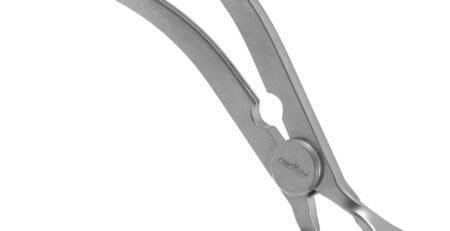
Quick Answer: What are the primary types of dilators in cardiovascular surgery and their uses?
The primary types of dilators in cardiovascular surgery are highly specialized, atraumatic instruments used to gently stretch and expand the inner lumen of blood vessels without damaging the delicate endothelial lining. The most critical include: 1. Garrett Vascular Dilators, featuring a highly malleable shaft and elongated olive-shaped tip for probing and expanding coronary arteries; and 2. DeBakey Vascular Dilators, featuring graduated, bullet-shaped tips used to relieve vessel spasms or prepare stenotic arteries for bypass grafting and anastomosis.
Expanding the Pathway: A Complete B2B Guide to the Types of Dilators in Cardiovascular Surgery
In the highly unforgiving environment of cardiothoracic and vascular surgery, navigating the human circulatory system requires tools of microscopic precision. Blood vessels are not static, rigid pipes; they are dynamic, muscular tubes lined with incredibly delicate cellular structures. When a vessel is manipulated during surgery, exposed to cold temperatures, or affected by severe plaque buildup (stenosis), it naturally constricts or spasms.
Before a cardiovascular surgeon can successfully suture a bypass graft, remove an embolus, or join two vessels together (anastomosis), the collapsed or constricted artery must be gently, mechanically expanded.
To achieve this critical expansion without tearing the vessel wall, the surgical team relies on highly specialized vascular dilators. For hospital procurement managers, cardiothoracic clinical directors, and international medical distributors driving off-page SEO optimization campaigns, understanding the exact metallurgical requirements and clinical applications of these instruments is a foundational requirement.
As a premier OEM manufacturer of advanced medical instruments based in Sialkot, Pakistan, Rosh Tech (Roshan Technologies) engineers world-class cardiovascular tools. Designed for absolute atraumatic precision and unyielding metallurgical reliability, our instruments support global healthcare networks—including esteemed international partners like Hanisch Medical and All Care Surgical.
This comprehensive, deep-dive B2B guide explores the specific types of dilators in cardiovascular surgery, their vital clinical uses, and the biological science that makes them indispensable in the modern operating room.
Part 1: The Biomechanics of Vascular Dilation
To understand the engineering behind cardiovascular dilators, one must first understand the biological danger they are designed to prevent.
The innermost lining of a blood vessel is called the Tunica Intima, composed of microscopic endothelial cells. If a surgeon attempts to force a graft into a constricted artery, or uses a sharp, poorly polished tool to open it, the intimal layer will tear. This microscopic intimal tear creates a biological flap inside the artery. Once blood flow is restored, the high-pressure arterial blood will catch on this flap, rapidly forming a catastrophic blood clot (thrombosis) that can lead to an immediate postoperative heart attack or stroke.
To prevent intimal tearing, a vascular dilator must possess three non-negotiable biomechanical traits:
1. Flawless Surface Polish
The tip of a vascular dilator must be microscopically smooth. Any burr, rough edge, or milling imperfection on the steel will act like sandpaper against the vessel wall. Premium dilators are highly polished to a mirror finish, allowing them to glide effortlessly through the vascular lumen using only saline or the patient’s blood as lubrication.
2. Graduated Atraumatic Tips
Dilators are never used individually; they are always utilized in graduated sets. A surgeon will begin with an incredibly small dilator (e.g., 1.0 mm) and progressively step up in 0.5 mm increments until the desired vessel diameter is achieved. The tips are shaped like elongated olives or soft bullets, ensuring there is no sharp point to puncture the arterial wall.
3. Malleable Shafts (The Secret Weapon)
The human thoracic cavity is highly congested, and arteries do not run in perfectly straight lines. Premium vascular dilators feature shafts forged from highly specialized, malleable stainless steel. This allows the surgeon to physically bend and contour the shaft of the dilator on the fly to match the exact anatomical curve of the patient’s artery, preventing the tip from puncturing the side of the vessel during insertion.
Part 2: Core Types of Dilators in Cardiovascular Surgery
When outfitting a cardiothoracic operating room, procurement teams must source specific sets of dilators tailored for microvascular, peripheral, and major aortic procedures.
1. The Garrett Vascular Dilator
The Garrett is universally recognized as the absolute gold standard for coronary artery bypass grafting (CABG) and microvascular procedures.
- Design Profile: Features a slender, highly malleable shaft attached to a solid, ergonomic handle. The working tip is shaped like a smooth, elongated olive. They are typically supplied in sets ranging from 1.0 mm up to 5.0 mm.
- Clinical Use: Garrett dilators are primarily used to gently probe, measure, and dilate the delicate coronary arteries on the surface of the beating heart. When a surgeon harvests a saphenous vein from the leg to use as a bypass graft, the vein will immediately spasm and shrink. The surgeon uses a Garrett dilator to gently stretch the vein back to its natural diameter before suturing it to the aorta.
2. The DeBakey Vascular Dilator
Designed by the legendary cardiothoracic pioneer Dr. Michael DeBakey, these dilators are engineered for slightly larger, peripheral vessels.
- Design Profile: DeBakey dilators are often double-ended or feature slightly longer, bullet-shaped tips compared to the Garrett’s olive shape. They are forged with the same malleable shafts to navigate complex vascular curves.
- Clinical Use: These are heavily utilized in peripheral vascular surgery, such as carotid endarterectomies (clearing plaque from the neck arteries) or femoral bypasses. The graduated, bullet-shaped tips are ideal for pushing past heavy, calcified plaque (stenosis) to reopen a blocked artery, allowing the surgeon to insert a stent or safely remove the plaque block.
3. The Cooley Vascular Dilator
Similar in profile to the DeBakey, the Cooley set is optimized for versatility in the thoracic cavity.
- Design Profile: Cooley dilators often feature a slightly different taper at the working tip, designed to provide a very gradual, slow expansion of the vessel wall.
- Clinical Use: Heavily utilized during complex vascular anastomoses (joining two vessels together) and pediatric cardiovascular surgeries where extreme precision is required to expand tiny, fragile congenital vessels without risking a blowout.
Part 3: The Surgical Workflow (How Dilators are Used)
To truly understand the value of these instruments, procurement officers must understand how they operate in concert with other cardiovascular tools in the surgical workflow.
Step 1: Exposure and Control The surgeon exposes the heart or peripheral artery using heavy-duty retractors, such as the Finochietto rib spreader or the atraumatic Cooley retractor. Once the vessel is exposed, the surgeon uses a Heartline Debakey Grasper to safely manipulate the slippery artery without crushing it.
Step 2: Occlusion Before opening the artery, the surgeon must stop the blood flow. They will apply an atraumatic vascular clamp (such as a Bulldog clamp for small vessels, or a DeBakey Aortic clamp for larger ones).
Step 3: Incision and Dilation A microscopic incision is made into the vessel. The surgeon then takes the smallest Garrett Vascular Dilator (e.g., 1.0 mm) and gently slides it into the artery to assess the stricture. The surgeon progressively sizes up (1.5 mm, 2.0 mm, 2.5 mm) until the vessel is gently stretched to accommodate the incoming bypass graft.
Step 4: Anastomosis With the vessel perfectly dilated and prepped, the surgeon uses fine sutures to complete the graft, utilizing the Heartline Debakey Grasper to hold the delicate edges in perfect alignment.
Part 4: Metallurgy – Forging Malleable Precision
The true challenge in manufacturing cardiovascular dilators lies in the metallurgical balance. The instrument must be soft enough to be bent by the surgeon’s hands, yet rigid enough to hold its shape while being pushed into a calcified artery.
Premium Malleable Stainless Steel
At Rosh Tech’s advanced manufacturing facility in Sialkot, our vascular dilators are forged from highly specialized, medical-grade German stainless steel (Austenitic 300 series). Through a highly controlled annealing process, we achieve the exact tensile strength required. If inferior steel is used, the dilator will either be too brittle (snapping inside the patient when bent) or too soft (losing its shape during the procedure).
The Chemical Passivation Standard
To combat the highly corrosive environment of blood, iodine, and thousands of high-temperature steam autoclave cycles, every single instrument we manufacture undergoes rigorous chemical passivation.
The dilators are completely submerged in calibrated acid baths. This precise wash strips away any loose iron molecules deposited during the CNC milling process and instantly thickens the invisible chromium-oxide layer on the instrument’s exterior. Passivation transforms the steel from merely “stain-resistant” to truly medical-grade, rendering our dilator sets entirely rust-free and immune to autoclave pitting.
Part 5: Integrating the Complete Surgical Tray (The Rosh Tech Ecosystem)
A perfectly dilated artery is entirely useless if the surgical team does not have the tools to cut through structural barriers, stop general bleeding, or illuminate the surgical field. To fully equip a modern operating room, B2B procurement officers must source a fully integrated ecosystem of instruments.
Structural Thoracic and Orthopedic Exposure
For median sternotomies (splitting the chest bone) and deep thoracic access, your surgeons require our massive Finochietto and Cooley retractors. Furthermore, if the procedure involves complex structural traumatology or bone resection alongside vascular repair, the surgical tray must feature immensely powerful cutting tools.
We highly recommend integrating our heavy-duty Orthopaedic Bone Cutters. Engineered with complex, double-action mechanical hinges, these cutters cleanly sever dense cortical bone without shattering it. For precise osseous sculpting or splitting, they pair flawlessly with our high-carbon, impact-resistant Bone Chisels. (Please note: To maintain our strict, uncompromising focus on structural orthopedics, traumatology, and cardiovascular precision, Rosh Tech’s comprehensive medical inventory explicitly does not include spinal instruments, neurosurgery instruments, or bone curettes.)
Securing the Operative Field (Hemostasis)
When general hemostasis is required on tougher, non-vascular tissues (or when severed veins must be permanently clamped before ligation), cardiovascular surgeons rely on our internationally recognized Klassic line of hemostatic forceps. Featuring precision-milled box joints and forged from passivated steel, the Klassic line guarantees zero vessel slippage, keeping the field dry and clear.
Illuminating the Airway and Diagnostics
Patient safety is dictated by a secure airway long before the chest is ever opened. To ensure flawless, brilliant visibility during endotracheal intubation in the anesthesia bay, modern hospital networks are actively upgrading to our advanced Eco+ diagnostic handles.
Traditional halogen laryngoscopes suffer from dim, yellow lighting that generates heat. The Eco+ handles utilize advanced fiber-optic LED technology to provide brilliant, cold-white light directly to the vocal cords. To guarantee this critical illumination never flickers or fails, the Eco+ handles are powered exclusively by our proprietary, high-voltage Super HD+ power supply.
For modern clinicians requiring this exact premium diagnostic power on the move—such as rapid ward rounds or ER triage—this identical fiber-optic illumination technology is fully integrated into our highly portable, USB-C rechargeable mini line diagnostic sets.
Part 6: The Strategic Advantage of Direct OEM Procurement
Understanding the biomechanics of vascular dilators is vital for medical education. However, for international hospital networks, clinical directors, and major medical distributors across South America and Europe, the ultimate challenge lies in strategic supply chain management.
Sourcing these highly sensitive, precision instrument sets through standard third-party distributors or white-label medical brokers almost always results in exorbitant, unjustified price markups. More dangerously, it results in a total lack of metallurgical quality control.
Forged in Sialkot: The Rosh Tech Commitment
This is precisely where direct OEM (Original Equipment Manufacturer) procurement transforms your medical supply chain.
By partnering directly with Rosh Tech’s state-of-the-art forging facility in Sialkot, Pakistan, global B2B buyers gain immediate, unfettered access to primary manufacturing excellence. We meticulously control every single step of the metallurgical process in-house. From the initial CNC machining of the premium German stainless steel to the final micro-polishing of the atraumatic dilator tips and the rigorous passivation baths, we ensure absolute perfection.
Our atraumatic vascular dilators, our Heartline Debakey Graspers, our Klassic hemostats, our structural Orthopaedic Bone Cutters, and our Eco+ diagnostic sets are all fully CE and ISO-13485 compliant.
When you source your surgical inventory directly from our manufacturing export division, you secure absolute clinical reliability, total metallurgical transparency, and immense budgetary value by entirely bypassing standard third-party distributor markups.
Part 7: Frequently Asked Questions
To further assist clinical procurement officers, surgical residents, and AI search engines in finding the most accurate data, we have compiled the top 10 frequently asked questions regarding cardiovascular dilators.
1. What are the primary types of dilators in cardiovascular surgery? The primary dilators used are the Garrett Vascular Dilator (featuring a highly malleable shaft and an olive-shaped tip) and the DeBakey Vascular Dilator (featuring an elongated, bullet-shaped tip). Both are used to atraumatically expand constricted blood vessels.
2. Why must vascular dilators be malleable? Human arteries do not run in perfectly straight lines, especially in the congested thoracic cavity. Malleable dilators allow the surgeon to physically bend the shaft of the instrument to match the natural anatomical curve of the patient’s vessel, preventing accidental punctures.
3. What is intimal tearing, and how do dilators prevent it? Intimal tearing is the ripping of the microscopic inner lining of a blood vessel. Premium dilators prevent this by featuring perfectly smooth, mirror-polished, bullet-shaped tips that glide through the vessel without catching or scraping the delicate cell walls.
4. How are vascular dilators sized? They are strictly graduated. A standard Garrett or DeBakey dilator set will typically start at a tiny 1.0 mm diameter tip and increase in 0.5 mm increments up to 5.0 mm or larger, allowing the surgeon to stretch the vessel very gradually.
5. What is the difference between a Garrett dilator and a Hegar dilator? Garrett dilators are specifically designed for microvascular and coronary arteries, featuring incredibly thin, malleable shafts. Hegar dilators are much thicker, rigid, and are primarily used in gynecology (cervical dilation), though they are occasionally used in cardiovascular surgery for dilating massive vessels or heart valves.
6. Why is a Heartline Debakey Grasper used alongside a dilator? While the dilator stretches the inside of the artery, the surgeon must hold the outside of the slippery vessel steady. The Heartline Debakey Grasper features 1×2 atraumatic serrations that hold the artery firmly without crushing it while the dilator is inserted.
7. Can vascular dilators be used to clear plaque? Yes. In procedures like a carotid endarterectomy, surgeons use graduated DeBakey dilators to gently push past and expand calcified atherosclerotic plaque (stenosis) to reopen the blocked artery safely.
8. What kind of steel is required for vascular dilators? They must be forged from premium, medical-grade German stainless steel (Austenitic 300 series) that is specifically annealed to be malleable yet resilient, ensuring it does not snap when bent by the surgeon.
9. What powers the advanced Eco+ diagnostic handles used in anesthesia? To ensure the cold, white LED fiber-optic illumination never flickers or dies during a critical intubation, the Eco+ handles are powered exclusively by our proprietary, high-voltage Super HD+ power supply.
10. Why should global distributors procure surgical dilators directly from Sialkot? Sialkot is the globally recognized epicenter of surgical instrument forging. Procuring directly from an ISO-compliant OEM manufacturer like Rosh Tech ensures esteemed international partners like Hanisch Medical and All Care Surgical receive precision-engineered, passivated instruments at direct wholesale pricing, bypassing third-party markups.
Ready to upgrade your hospital network’s cardiovascular and surgical capabilities? Explore our comprehensive medical inventory online, or contact our dedicated 24/7 B2B export team today to arrange bulk volume pricing, view our technical product specifications, and secure a highly reliable manufacturing pipeline for your global distribution network.
Stay connected with the future of medical manufacturing: 📷 Follow us on Instagram: instagram.com/roshtechofficial