Quick Answer: What are sponge holding forceps and what are their uses in surgery?
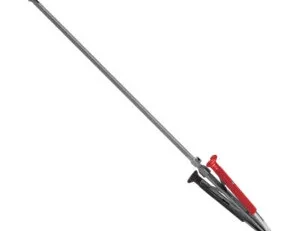
Sponge holding forceps are specialized, ring-handled surgical instruments featuring elongated shafts and fenestrated (ring-shaped) jaws. Their primary uses in surgery include securely gripping folded surgical sponges to absorb pooling blood, swabbing deep surgical cavities, and maintaining a clear operative field. Because their broad, rounded jaws distribute pressure evenly, they are heavily utilized to atraumatically retract delicate tissues, such as the lungs or bowel, and are indispensable in gynecological procedures for cervical inspection and post-partum hemorrhage control.
Mastering the Operative Field: The Complete Guide to Sponge Holding Forceps and Their Uses in Surgery
In the highly dynamic and critical environment of a modern operating theater, a surgeon’s most vital asset is not just their technical skill, but their visibility. When an incision is made, particularly in deep abdominal, thoracic, or pelvic surgeries, the surgical cavity can rapidly fill with pooling blood, saline, interstitial fluids, and cellular debris. The moment a surgeon loses visual contact with the anatomical target—such as a bleeding artery or a delicate nerve cluster—the risk to the patient increases exponentially.
While mechanical suction devices are excellent for rapidly evacuating large volumes of fluid, they cannot scrub, wipe, or apply direct localized pressure. This specific challenge is met by one of the most fundamentally important tools on the surgical tray: the sponge holding forcep.
Often referred to simply as “sponge clamps,” “swab forceps,” or “sponge sticks,” these instruments function exactly as their name implies. They grip folded surgical gauze or lap sponges with unyielding security, effectively transforming a small piece of cotton into a long-handled, highly precise surgical swab. However, the clinical utility of these instruments extends far beyond simple fluid management.
For hospital procurement managers, clinical educators, surgical technicians, and international medical distributors looking to upgrade their inventory, understanding the exact biomechanical specifications, the metallurgical requirements, and the diverse sponge holding forceps uses is essential.
As a premier manufacturer of premium medical instruments based in Sialkot, Pakistan, Rosh Tech engineers these forceps to deliver unparalleled reliability, grip, and atraumatic tissue handling for the global healthcare market. This comprehensive, 2,500+ word B2B guide explores the engineering behind these tools, the top models to procure, and their vital, multi-disciplinary applications across modern surgery.
Part 1: The Biomechanics and Engineering of Sponge Holding Forceps
To the untrained eye, a sponge holding forcep might simply look like a very long pair of medical tweezers. However, their design is a marvel of highly specific biomechanical engineering. To understand their value, one must first understand why standard surgical clamps cannot perform this job.
If a surgical team were to grip a folded cotton sponge with a standard Kelly hemostat or a Kocher clamp, the sharp transverse serrations or interlocking teeth would aggressively tear the cotton mesh. In a surgical cavity, leaving behind foreign bodies—even microscopic cotton fibers—can trigger severe inflammatory responses, post-operative infections, or the formation of granulomas. Furthermore, standard hemostats lack the necessary reach to access deep anatomical structures.
To solve these clinical challenges, sponge holding forceps are designed around three highly specialized architectural pillars:
1. Elongated, Calibrated Shafts
Surgeons frequently need to swab the very bottom of the pelvic floor or the deepest recesses of the thoracic cavity. Sponge forceps are manufactured with significantly elongated shafts, typically ranging from a standard 7 inches (18 cm) for superficial procedures, up to 10 inches (25 cm) or even 12 inches (30 cm) for bariatric or deep-cavity applications. The shafts must be structurally rigid; if the steel is too thin, the forcep will flex and bow when the surgeon applies pressure, resulting in a loss of tactile control.
2. The Box-Joint Pivot
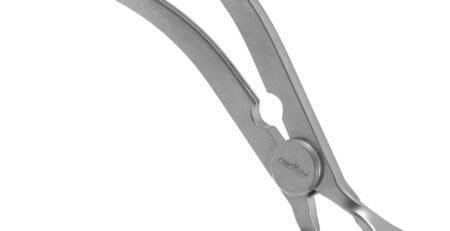
In premium surgical instruments, the hinge mechanism is critical. Cheaper instruments utilize a “lap joint” or a “screw joint,” where the two halves of the forcep simply rest on top of each other, held together by a central screw. Over time, and under the pressure of swabbing, a lap joint will loosen. When this happens, the incredibly long jaws can “scissor” or cross over one another, dropping the sponge directly into the patient’s cavity.
Rosh Tech manufactures our Klassic line of sponge forceps using precision-milled box-joints. In a box-joint, one half of the instrument is actually passed through a solid slot milled into the other half. This guarantees absolute structural integrity, ensuring the jaws align perfectly every single time, regardless of how much lateral pressure the surgeon applies.
3. Fenestrated Jaws
The defining feature of a sponge forcep is its jaw design. The tips of the jaws are “fenestrated”—meaning they are shaped like ovals or loops with a completely open, hollow center.
When the forcep clamps down on a folded sponge, the cotton bulges through the open center of the loops, providing immense friction and locking the sponge in place without tearing it. The inner grasping surfaces of these loops usually feature delicate, smooth, transverse serrations to further enhance the grip. Importantly, the outer edges of the loops are flawlessly rounded and polished. This ensures that as the instrument is rapidly moved in and out of the surgical cavity, it does not accidentally nick, scratch, or puncture surrounding tissues.
4. The Ratcheted Ring Handle
At the base of the instrument, near the finger rings, is a stepped locking ratchet. This mechanism allows the scrub nurse to fold the sponge, lock the instrument closed, and hand it to the surgeon. The surgeon does not need to expend hand strength keeping the forcep pinched shut; they can dedicate 100% of their physical effort to manipulating the swab and applying targeted pressure.
Part 2: Metallurgy – Forging the Perfect Instrument
The structural integrity and functional reliability of any surgical instrument begin at the microscopic level with the chemical composition of the steel. The environment inside a high-volume hospital is brutal. Instruments are subjected to blood, saline, corrosive bodily fluids, enzymatic cleaners, and thousands of cycles inside high-pressure, high-temperature steam autoclaves.
Sponge holding forceps cannot be manufactured from standard industrial steel; they must be forged from highly specific grades of Medical-Grade Stainless Steel.
The Role of Austenitic and Martensitic Steel
While cutting tools (like scalpels or chisels) are forged from high-carbon Martensitic steel to hold a razor edge, sponge forceps are typically forged from a precise blend of 300-series (Austenitic) or 400-series steel engineered for maximum corrosion resistance and structural rigidity. The steel must contain a high percentage of chromium. When exposed to oxygen, this chromium creates a microscopic, invisible layer of chromium-oxide that prevents the underlying iron from rusting.
The Passivation Process
At our Sialkot manufacturing facility, forging the steel is only the first step. Every sponge holding forcep undergoes a rigorous chemical process known as passivation. The instruments are submerged in highly calibrated nitric or citric acid baths. This acid strips away any free iron molecules that may have been deposited on the surface of the instrument during the CNC milling or hand-filing processes.
Passivation effectively thickens the chromium-oxide layer, transforming the instrument from simply “stain-resistant” to truly medical-grade. For hospital procurement teams, sourcing fully passivated instruments from a direct OEM manufacturer is the only way to ensure the hospital’s capital investment will not succumb to premature rusting or mechanical failure.
Part 3: Top Sponge Holding Forceps to Buy (The Global Standards)
When a hospital network or an international medical distributor looks to bulk-purchase these instruments, they are not buying generic tools. They are sourcing specific, universally recognized patterns. Here are the top sponge holding forceps to buy for modern surgical applications.
1. The Foerster Sponge Forcep (The Universal Standard)
If a surgeon asks for a “sponge stick” in almost any operating room globally, they will be handed a Foerster sponge forcep. It is the absolute gold standard for this category.
- Design Profile: The Foerster features a moderately thick, durable shaft and ends in prominent, oval-shaped fenestrated loops. The inner aspect of the loops contains fine, atraumatic serrations.
- The Straight Variation: Straight Foerster forceps are heavily utilized in open abdominal procedures (laparotomies). They provide direct, powerful, straight-line access to the surgical site, allowing the surgeon to apply immense downward pressure to stop acute bleeding.
- The Curved Variation: The curved Foerster is arguably even more versatile. The subtle curve in the shaft allows the surgeon to reach deep into a cavity (such as the pelvis) while keeping their own hand and the handle of the instrument out of their direct line of sight. This unobstructed visibility is vital in deep-cavity procedures.
2. The Rampley Sponge Holding Forcep
While visually similar to the Foerster, the Rampley forcep represents a distinct structural variation favored in many European and British medical systems.
- Design Profile: The fenestrated loops on the Rampley are slightly more elongated and tear-drop shaped compared to the perfect ovals of the Foerster. Furthermore, the overall build of the Rampley is often slightly heavier and more robust.
- Application Focus: The Rampley is the preferred instrument for heavy-duty preoperative skin preparation. Scrub nurses utilize the Rampley’s aggressive grip to aggressively scrub a patient’s skin with heavy iodine or chlorhexidine-soaked sponges prior to draping.
3. The Maier Sponge Forcep
The Maier forcep is designed for extreme depth and specialized access.
- Design Profile: The Maier features a significantly more pronounced curve than a curved Foerster, and the shafts are often longer. The fenestrations are slightly smaller.
- Application Focus: This instrument is designed specifically to navigate around bulky anatomical structures. It is frequently utilized in bariatric surgeries or complex urological procedures where the surgeon must navigate around the curvature of the bladder or navigate deep abdominal fat pads without losing their grip on the swab.
4. The Bozeman Sponge Forcep (The Gynecological Specialist)
The Bozeman forcep is a highly specialized instrument engineered almost exclusively for the OB/GYN department.
- Design Profile: The Bozeman forcep features an iconic “S-curve” or a double-curve in its shaft.
- Application Focus: This unique double-curve matches the natural anatomical curvature of the female vaginal canal and pelvic arch. It allows the gynecologist to introduce the instrument to the cervix without the handle pressing uncomfortably against the patient’s anatomy, making it the top choice for outpatient colposcopies and deep uterine swabbing.
Part 4: Key Clinical Uses in Surgery (A Deep Dive)
The true value of these instruments is revealed in their immense versatility. The sponge holding forceps uses bridge the gap between pre-operative preparation, fluid management, and direct anatomical manipulation.
1. Deep Cavity Swabbing and Fluid Evacuation
The most common and critical use of the sponge forcep is intraoperative fluid management.
Imagine a trauma laparotomy where a patient has suffered a ruptured spleen. The abdominal cavity is rapidly filling with blood, obscuring the source of the hemorrhage. Mechanical suction can remove the pooling blood, but the surgeon needs to find the exact bleeding vessel. The surgeon will take a Foerster sponge forcep loaded with a dry laparotomy sponge and aggressively press it directly into the splenic bed.
This applies localized, direct pressure to temporarily halt the bleeding (hemostasis). Once the bleeding slows, the surgeon uses the sponge forcep to wipe away the remaining clots, instantly drying the field. This split-second of clear visibility allows the surgeon to identify the ruptured vessel and apply a permanent hemostatic clamp or suture. Without the long reach and secure grip of the sponge forcep, this maneuver would be impossible.
2. Atraumatic Tissue Retraction (The “Sponge Stick” Technique)
Because the fenestrated jaws of a Foerster or Rampley clamp are broad, perfectly smooth, and rounded, they distribute mechanical pressure over a wide surface area. Recognizing this, surgeons frequently use sponge forceps without a sponge to gently grasp, hold, and retract highly delicate organs that would be instantly crushed or punctured by standard toothed tissue forceps.
- Thoracic Surgery: During a thoracotomy or lung resection, the surgeon must gently move the lung lobes out of the way to access the heart or the pleural cavity. A sponge forcep allows the surgeon to grasp the delicate pulmonary tissue atraumatically, retracting the lung without tearing the alveoli or causing a pneumothorax (lung collapse).
- Bowel Manipulation: In abdominal surgeries, loops of the small intestine constantly obstruct the operative field. Surgeons use sponge forceps to safely push, grasp, and move the slippery intestines out of the surgical corridor.
3. Essential Gynecological and Obstetric Applications
Sponge forceps are arguably the most frequently used instruments in the OB/GYN department.
- Cervical Inspection & Colposcopy: During a cervical exam, the gynecologist must visualize the cervix clearly. A Bozeman or curved Foerster forcep is used to hold a cotton ball to swab away thick cervical mucus. During a colposcopy, the forcep is used to apply a 3% to 5% acetic acid (vinegar) solution directly to the cervix, which highlights abnormal, pre-cancerous cells by turning them white.
- Post-Partum Hemorrhage Control (D&C): Following childbirth or during a miscarriage, a patient can suffer severe, life-threatening hemorrhage if fragments of the placenta remain attached to the uterine wall. Obstetricians use long, curved sponge forceps to reach through the dilated cervix, gently sweeping the interior walls of the uterus to safely grasp and extract these retained placental fragments or heavy blood clots, instantly resolving the hemorrhage.
4. Preoperative Skin Preparation (Asepsis)
Before the scalpel ever touches the patient, the surgical site must be sterilized to prevent Surgical Site Infections (SSIs).
Strict aseptic technique dictates that the scrub nurse or surgical assistant preparing the skin should not touch the unsterilized patient with their sterile gloves. Instead, they use a Rampley or Foerster sponge forcep to grip a folded sponge soaked in a heavy antiseptic solution (like povidone-iodine or chlorhexidine). Using the long handle, they aggressively scrub the patient’s skin, working in concentric circles from the planned incision site outward. The forcep acts as a sterile extension of the nurse’s hand, ensuring the surgical field is flawlessly prepped.
5. Blunt Dissection
In certain delicate procedures, using a sharp scalpel or surgical scissors carries too high a risk of cutting an unseen nerve or blood vessel. In these cases, surgeons utilize “blunt dissection.”
A surgeon will take a sponge holding forcep, clamp a very small, tightly rolled sponge (known in the OR as a “peanut” or a “cherry”) into the tips of the jaws. They will then use this firm, blunt tip to gently push, rub, and tease apart layers of connective tissue or fascia. This separates the anatomical structures safely without the use of a sharp cutting edge, preserving the integrity of underlying vessels.
Part 5: Complete Your Surgical Tray (Integrating Specialized Tools)
While sponge holding forceps are the undisputed masters of visibility, fluid management, and atraumatic tissue handling, they represent only one specific phase of a complete surgical operation. To equip a modern, high-performance operating room, these tools must be integrated with robust resection equipment and advanced diagnostic technology.
When facing dense musculoskeletal challenges, the atraumatic nature of a sponge forcep gives way to the heavy-duty engineering required for orthopedic traumatology. For complex joint replacements, spinal procedures, and fracture reductions, we highly recommend completing your B2B procurement by sourcing our heavily reinforced Orthopaedic Bone Cutters. Engineered with double-action mechanical hinges, these cutters provide the immense force required to cleanly sever cortical bone.
Furthermore, these cutters must be paired alongside our high-carbon, precision-tempered Bone Chisels. By utilizing our medical-grade chisels alongside heavy surgical mallets, your surgical team can confidently manage, sculpt, and split dense bone without the risk of instrument failure or edge degradation.
Finally, ensuring a clear, secure airway before the surgery even begins is a matter of life and death. To guarantee brilliant internal visibility during endotracheal intubation, modern hospital networks are actively upgrading to our advanced Eco+ diagnostic handles.
Traditional laryngoscopes suffer from dim, yellow halogen lighting that generates heat and drains batteries rapidly. The Eco+ handles utilize advanced fiber-optic LED technology, providing cold, flicker-free white light. To ensure this critical illumination never fails during a trauma intubation, the Eco+ handles are powered by our proprietary, high-voltage Super HD+ power supply.
For rapid deployment in pediatric wards, emergency rooms, or rapid diagnostic rounds, this same advanced illumination technology is available in our compact, specialized mini line diagnostic sets. This ensures that whether a clinician is in a massive operating theater or a remote field clinic, they have access to premium Rosh Tech visibility.
Part 6: The Strategic Advantage of Direct OEM Procurement
Understanding the diverse sponge holding forceps uses is only the first step. For international hospital networks, medical distributors, and clinical procurement officers, the real challenge lies in sourcing these instruments reliably, at scale, and without compromising quality.
In the global medical supply chain, purchasing through third-party distributors or white-label resellers often results in exorbitant markups. More dangerously, it can result in a lack of quality control. If a hospital purchases sponge forceps made from inferior steel, the box-joints will fail, the ratchets will slip, and the instruments will rust after only a few autoclave cycles, leading to massive replacement costs and potential patient safety incidents.
The Rosh Tech Commitment to Global Excellence
This is where direct OEM procurement changes the landscape.
By partnering directly with Rosh Tech’s state-of-the-art manufacturing facility in Sialkot, Pakistan, global B2B buyers gain a massive strategic advantage. We are not a middleman; we are the primary forge. From the initial CNC milling of the German stainless steel to the final rigorous passivation baths, we control every single step of the metallurgical process.
Our Klassic line of surgical forceps is fully CE and ISO-13485 compliant, ensuring that your hospital networks receive world-class, rigorously tested medical instrumentation. When you source your surgical inventory directly from our manufacturing division, you ensure absolute clinical reliability while entirely bypassing standard supply chain markups.
Whether you are equipping a massive general surgery department with hundreds of Foerster sponge forceps, outfitting a trauma center with heavy-duty orthopedic tools, or modernizing an anesthesiology cart with our advanced electronics, Rosh Tech delivers precision you can rely on.
Ready to source the most reliable surgical instruments on the global market? Explore our comprehensive medical inventory, or contact our dedicated 24/7 B2B export team today to arrange bulk volume pricing, discuss custom OEM manufacturing solutions, and secure a reliable pipeline for your global distribution network.
Stay connected with the future of medical manufacturing: 📷 Follow us on Instagram:instagram.com/roshtechofficial