Bone cutting is one of the most challenging aspects of orthopedic and trauma surgery because bone is the densest tissue in the human body. Precision is absolutely crucial for proper healing. The wrong instrument can cause severe damage to surrounding soft tissues, trigger thermal necrosis, and drastically delay patient recovery.
Therefore, understanding the highly specific mechanics of each instrument used to cut bone is vital for successful surgical outcomes. In this comprehensive B2B guide, we explore the primary bone cutter surgical instruments, their clinical functionalities, and their indispensable role in modern orthopedic surgery.
What are Bone Cutter Surgical Instruments?
Bone cutter surgical instruments are heavy-duty, highly specialized medical devices engineered to cut, carve, shape, or entirely remove bone tissue with micro-millimeter precision.
Forged from premium medical-grade stainless steel, these instruments are designed to withstand the immense mechanical force required to penetrate hard skeletal tissues. Simultaneously, they are calibrated to prevent collateral tissue trauma, offering surgeons controlled bone manipulation during complex procedures such as fracture repairs, joint resections, amputations, and structural bone grafting.
Types of Bone Cutter Surgical Instruments
Surgical trays must be equipped with a diverse array of bone cutters, as surgeons select instruments based on the exact anatomical site and the density of the bone involved. Here are the 7 essential categories of bone-cutting instruments utilized in modern operating rooms:
1. Bone Cutting Forceps
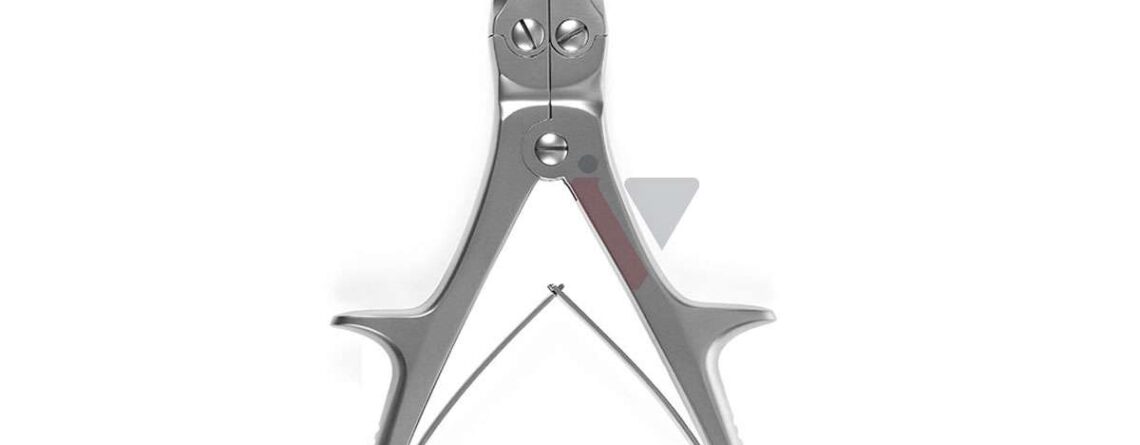
Bone cutter forceps feature incredibly strong, sharpened jaws designed to cleanly bite through bone during procedures that demand rapid precision.
- Liston Bone Cutting Forceps: One of the most widely utilized variants, featuring a double-action or single-action hinge. They are specifically used to divide hard, thick bones for resection or anatomical shaping in joint reconstruction and maxillofacial procedures.
2. Surgical Bone Saws
Bone saws are heavily relied upon for large osteotomies or for harvesting thick bone grafts. They provide steady, clean, and continuous cuts through dense cortical bone with minimal physical effort from the surgeon.
- Satterlee Bone Saw: Features a wide, large blade with a slender profile for the controlled cutting of dense bones. Its push-pull motion is ideal for making long, straight cuts during knee replacement procedures.
- Amputation Saw: Engineered specifically to cut through thick bone and cartilage rapidly, primarily used for removing limbs affected by severe trauma or gangrene.
- Gigli Saw: Features a flexible, twisted-wire blade with loop handles. It allows for the precise, controlled cutting of bones in highly confined spaces, often used in cranial or orthopedic fracture realignments.
3. Heavy-Duty Bone Rongeurs
Bone rongeurs are spring-loaded, highly tactile instruments featuring scoop-shaped, sharpened tips. They are designed to “bite” away small, precise fragments of hard bone.
- Kerrison Rongeur: Features a sharp, thin footplate designed for incredibly delicate insertion between the bone and the dura mater. It is the gold standard for removing small fragments of the lamina during spinal and neurosurgery.
- Ruskin Rongeur: Utilizes a compound-action mechanism with scoop-shaped tips to effortlessly bite and extract dense bone fragments from tight, restrictive spaces.
4. Bone Osteotomes
Bone osteotomes feature a distinctly bevelled edge on both sides of the blade. This symmetrical design allows the tool to cut straight down into the bone without wedging or damaging nearby anatomical structures.
- Hibbs Osteotome: A widely used variant that expertly creates space for bone grafts during delicate spinal stabilization and bone fusion procedures.
5. Surgical Bone Chisels
Unlike osteotomes, bone chisels feature a single, atraumatic bevelled blade. They are utilized for carving, shaping, and shaving bone tissue, or for safely removing malfunctioning orthopedic implants. They are incredibly common in dental, maxillofacial, and reconstructive orthopedic procedures.
6. Bone Gouges
Bone gouges are characterized by their curved, highly contoured blades. They are crucial for shaping or scooping out cancellous (soft) bone, improving surgical access to deeply confined areas.
- Swan Neck Gouge: Features a dramatically curved shaft that effortlessly reaches deep, restrictive anatomical cavities to shape or harvest bone grafts.
7. Bone Drills and Burrs
Drills and burrs are rotating instruments used to create precise holes for orthopedic screws and titanium plates, or to perform highly localized bone cutting.
- Hudson Hand Drill: A manual cranial instrument used to create precise burr holes in the skull, safely releasing intracranial pressure after a traumatic brain injury.
- Caspar Drill Guide: Features a hollow tubular end that safely guides the drill bit. It ensures slip-free fixation and precise placement of distraction pins during cervical spine surgeries.
Quick Reference Table: Bone Cutting Instruments
| Instrument Category | Primary Function | Ideal Surgical Application |
| Bone Forceps (Liston) | Biting/dividing thick bone | Maxillofacial & Joint Reconstruction |
| Bone Saws (Gigli, Satterlee) | Continuous, large bone cuts | Amputations & Large Osteotomies |
| Rongeurs (Kerrison, Ruskin) | Biting small bone fragments | Spinal Surgery & Neurosurgery |
| Osteotomes (Hibbs) | Straight, downward bone cutting | Bone Fusion & Grafting |
| Drills/Burrs (Hudson) | Creating precision holes | Cranial trauma & Orthopedic plating |
Partner with Rosh-Tech for Orthopedic Excellence
Bone cutter surgical instruments are the indispensable foundation of modern orthopedic surgery. Choosing the right manufacturing partner allows hospitals to equip their surgeons with tools that guarantee the utmost precision and safety that every patient deserves.
For premium, export-grade orthopedic instruments, trust Roshan Technologies (Rosh-Tech). Forged from high-grade German stainless steel, our instruments emphasize unparalleled quality, heavy-duty functionality, and complete autoclave durability. [Contact our export team today] to request a wholesale orthopedic catalog or discuss bulk OEM manufacturing.
Frequently Asked Questions (FAQ)
Can bone cutter surgical instruments be reused after orthopedic procedures?
Yes. When manufactured from premium medical-grade stainless steel, bone cutter surgical instruments are fully reusable. They must be subjected to rigorous hospital sterilization protocols. For intricate tools with hinges, double-action locks, or springs (like rongeurs), ultrasonic cleaning and micro-brushing are required to remove all biological debris prior to autoclaving.
What materials does Rosh-Tech use to manufacture bone-cutting instruments?
At Roshan Technologies, we forge our bone-cutting instruments entirely from high-grade surgical stainless steel. This ensures immense structural durability, heavy-duty reliability, and maximum resistance to corrosion and micro-pitting during high-temperature sterilization.
Which instrument is specifically used to cut the human skull?
Cranial access typically requires a two-step instrumental approach. First, a Hudson drill (or surgical perforator) is used to create precise burr holes in the skull. Next, a specialized cranial bone saw or a Gigli wire saw is passed between the holes to safely cut and remove the bone flap.
Where can distributors source high-quality orthopedic instruments?
Hospital procurement networks and global medical distributors can buy premium orthopedic instruments directly from Roshan Technologies (Rosh-Tech) in Sialkot, Pakistan. We bypass middlemen to provide highly competitive B2B export pricing on an extensive catalog of forceps, rongeurs, and surgical saws.